Andersonville National Historic Site
Fast Facts
Andersonville National Historic Site
In the quiet, rolling landscape of southwest Georgia, Andersonville National Historic Site preserves a legacy of profound suffering and unparalleled resilience. This site is home to three distinct yet deeply interconnected features: the location of the infamous Camp Sumter military prison, the Andersonville National Cemetery, and the National Prisoner of War Museum. While it is inextricably linked to the American Civil War, the park serves a much broader purpose as the official national memorial to all American prisoners of war from every conflict in our nation's history.
The prison at Andersonville, officially known as Camp Sumter, operated for only 14 months during the final years of the Civil War, yet it became the deadliest ground of the entire conflict. Designed to hold 10,000 prisoners, at its peak it was crowded with over 32,000 Union soldiers. The conditions were horrific; lack of food, clean water, and adequate shelter led to the deaths of nearly 13,000 men. These soldiers were buried in mass trenches just outside the prison walls, a site that was designated as a National Cemetery in 1865, even before the war had fully concluded. Today, the rows of white marble headstones stand in silent testimony to the high cost of the struggle for the Union.
A visit to Andersonville is a solemn and educational journey. The National Prisoner of War Museum, which serves as the park's visitor center, provides an immersive look at the prisoner of war experience throughout American history, from the Revolutionary War to the present day. Through artifacts, films, and oral histories, the museum explores the physical and emotional challenges faced by those held in captivity. Beyond the museum, the historic prison site and the National Cemetery offer spaces for quiet reflection on the nature of sacrifice, the resilience of the human spirit, and the enduring importance of freedom.
Key Highlights
- National Prisoner of War Museum: Explore the only museum in the country dedicated specifically to the history and experiences of all American prisoners of war across all conflicts.
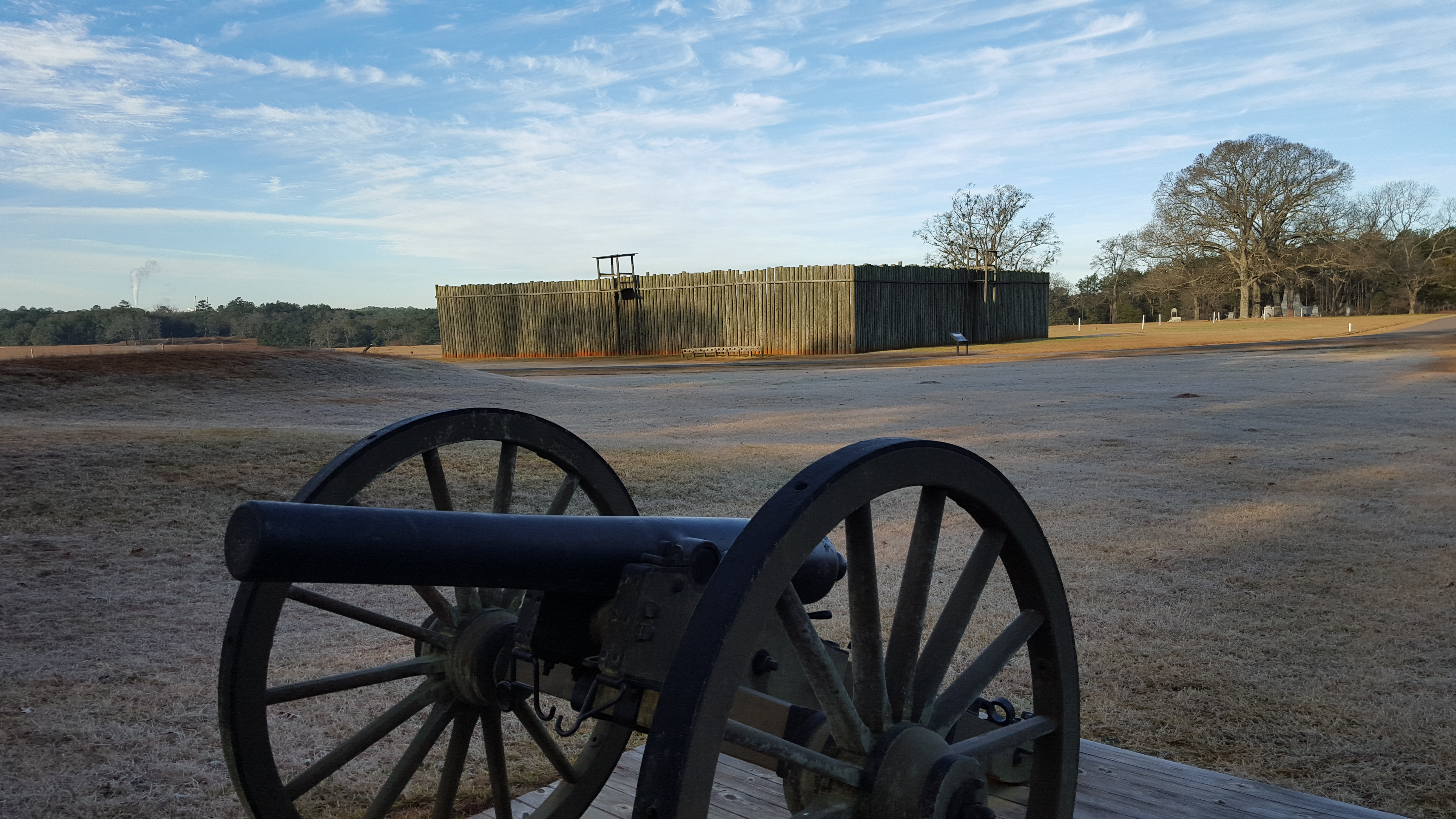
- Camp Sumter Prison Site: Walk the grounds of the original 26.5-acre stockade, where reconstructed gates and earthworks provide a tangible sense of the prison's scale and layout.
- Andersonville National Cemetery: Pay your respects at the final resting place of nearly 13,000 Union soldiers and over 21,000 American veterans who have been buried here in the years since the war.
- The Star Fort: View the remains of the massive earthwork fortification built by enslaved labor to guard the prison and prevent escape or rescue attempts.
- Monument Row: See the various state monuments erected in the early 20th century to honor the soldiers from different Northern states who suffered and died at Andersonville.
- Stockade Branch: Observe the small stream that served as the prison's primary water source, the contamination of which was a major factor in the high mortality rate.
- Junior Ranger Program: An educational opportunity for younger visitors to learn about the history of the Civil War and the concepts of honor and sacrifice.
Getting There
Andersonville National Historic Site is located in rural southwest Georgia, approximately midway between the cities of Americus and Montezuma.
By Car:
- From Americus, GA: Travel approximately 12 miles north on GA Highway 49. The park entrance is well-marked with National Park Service signage.
- From Montezuma, GA: Travel approximately 11 miles south on GA Highway 49.
- From Atlanta: The park is about a 2.5 to 3-hour drive south. Most visitors take I-75 South to GA Highway 26 in Perry, then follow local highways to GA Highway 49.
- From Savannah: The park is approximately 3 hours west via I-16 and local state routes.
- Main Entrance: The primary address for the National Prisoner of War Museum is 760 POW Road, Andersonville, GA 31711.
Nearest Airports:
- Southwest Georgia Regional Airport (ABY): Located in Albany, approximately 50 miles to the south.
- Middle Georgia Regional Airport (MCN): Located in Macon, approximately 60 miles to the northeast.
- Hartsfield-Jackson Atlanta International Airport (ATL): The nearest major international hub, about 130 miles to the north.
Public Transit: There is no public transportation, bus service, or shuttle that serves the Andersonville National Historic Site. A personal or rental vehicle is necessary for your visit.
Note on Navigation: The park is divided into several areas, including the museum, the prison site, and the cemetery. While these are all part of the same contiguous site, the park's internal roads are well-marked and easy to navigate by car or on foot.
For more detailed maps and turn-by-turn directions, visit the official park directions page.
Best Time to Visit
The climate of southwest Georgia is characterized by hot, humid summers and mild, occasionally damp winters.
Spring: This is a beautiful time to visit as the various monuments and the cemetery are surrounded by blooming dogwoods, azaleas, and magnolias. The weather is typically mild (60s and 70s), making it comfortable for walking the extensive prison grounds.
Summer: Summers are very hot and extremely humid. Temperatures frequently reach into the 90s, and afternoon thunderstorms are a daily occurrence. Because much of the prison site is open and exposed, it is highly recommended to visit early in the morning. The National Prisoner of War Museum is climate-controlled and provides a cool respite from the heat.
Fall: Autumn brings a welcome drop in humidity and pleasant, clear days. The changing colors of the Georgia hardwood forests provide a scenic backdrop for the National Cemetery. This is an excellent time for photography and for attending special commemorative events often held around Veterans Day.
Winter: Winters are generally mild, with daytime temperatures in the 40s and 50s. While snow is rare, the damp cold can be biting. The site is very quiet during this season, providing a particularly somber and reflective atmosphere.
Operating Hours: The National Prisoner of War Museum is open daily from 9:30 AM to 4:30 PM. The park grounds and the National Cemetery are open daily from 8:00 AM to 5:00 PM. Note that the museum and prison site are closed on Thanksgiving, Christmas, and New Year's Day, although the cemetery typically remains open.
Activities and Adventures
A visit to Andersonville is primarily focused on education, remembrance, and historical exploration.
The National Prisoner of War Museum: This should be your first stop. The museum’s exhibits are organized around the universal themes of the POW experience: capture, life in the camp, the struggle for survival, and finally, release or death. The museum also serves as the visitor center, where you can pick up maps and speak with park rangers.
Self-Guided Auto and Walking Tours: The park offers a 2-mile driving tour of the prison site and cemetery with several stopping points. Each stop features interpretive signage that explains the history of that specific area. For those who prefer to walk, a series of paths allow you to explore the prison stockade and the Star Fort at your own pace.
Exploring the Prison Site: As you walk the perimeter of the former stockade, you can see the "deadline"—a simple rail that prisoners were forbidden to cross. The white posts marking the original stockade line and the reconstructed north and south gates help you visualize the crowded and desperate conditions of 1864.
Andersonville National Cemetery: Walking among the thousands of headstones is a powerful experience. You can find the graves of the "Andersonville Raiders" (six prisoners who were executed by their fellow inmates for crimes within the camp) and visit the various state memorials. The cemetery is still an active burial ground for American veterans.
Living History and Commemorations: Periodically, the park hosts living history programs where costumed interpreters demonstrate the daily life of a Civil War soldier. Major commemorative ceremonies are held on Memorial Day and in late September for National POW/MIA Recognition Day.
Junior Ranger Program: Children can participate in an age-appropriate program that introduces them to the history of Andersonville and the broader concept of honoring those who serve in the military.
History & Significance
The significance of Andersonville lies in its role as a witness to the extremes of the American experience.
Camp Sumter (1864-1865): The prison was established in February 1864 because the existing Confederate prisons in Richmond were overcrowded and vulnerable to Union raids. Southwest Georgia was chosen for its perceived safety and proximity to the railroad. However, the Confederacy’s declining resources meant that they could not provide even the most basic necessities for the prisoners. The resulting humanitarian disaster became a major point of contention and propaganda for both sides during and after the war.
Clara Barton and Dorence Atwater: After the war, Clara Barton (founder of the American Red Cross) and Dorence Atwater (a former prisoner who had secretly kept a list of the dead) came to Andersonville. Their work ensured that the mass graves were identified and properly marked, allowing thousands of families to know the fate of their loved ones. This effort was the foundation of the Andersonville National Cemetery.
The Trial of Henry Wirz: The prison’s commander, Captain Henry Wirz, was the only Confederate official tried and executed for war crimes after the conflict. His trial in Washington, D.C., was a sensational event that highlighted the horrors of the camp and the nation's struggle to find justice in the aftermath of the war.
The National POW Memorial: In 1970, Congress designated Andersonville as a National Historic Site with a unique mandate: to tell the story of all American prisoners of war. This transformation from a Civil War site to a national memorial ensures that the lessons of Andersonville—about human rights, the laws of war, and the resilience of the human spirit—remain relevant for all generations.
Lodging and Camping
While Andersonville is a day-use site, there are several options for those looking to stay in the heart of Georgia.
In-Park Camping: There is no general camping allowed within the National Historic Site. A group campsite is available for organized groups (such as Scouts) but requires advance reservations.
Nearby Accommodations: The town of Americus (12 miles south) offers a variety of historic hotels, modern motels, and bed and breakfasts. The Windsor Hotel in Americus is a famous historic landmark built in 1892. Montezuma (11 miles north) also has local lodging options.
State Park Alternatives: Georgia Veterans State Park is located about 30 miles to the south near Cordele. It offers developed campgrounds, a lodge, and various recreational activities on Lake Blackshear.
Dining: The nearby towns of Americus and Montezuma have a wide range of dining options, from traditional Southern "meat and three" restaurants to modern cafes. The village of Andersonville, adjacent to the park, has a small cafe and a few local shops.
Essential Information
Park Fees and Passes
- Entrance Fee: There is no fee to enter Andersonville National Historic Site or the National Prisoner of War Museum. It is a free public facility.
- Tours: Self-guided materials are free. Occasionally, specialized guided tours may be offered by staff or volunteers at no charge.
Safety Considerations
- Heat and Humidity: The Georgia summer is intense. Always carry water, wear a hat, and take breaks in the air-conditioned museum.
- Insects: Ticks, mosquitoes, and "no-see-ums" are common in the wooded and grassy areas of the park. Use insect repellent and check yourself after walking the trails.
- Respectful Conduct: The National Cemetery is a place of active burial and solemn remembrance. Please maintain a quiet and respectful demeanor. Do not lean on or sit on headstones or monuments.
- Wildlife: Be aware of your surroundings, as snakes (including venomous species like the copperhead) are native to the region. Stay on developed paths and roads.
Services and Facilities
The National Prisoner of War Museum is fully accessible and includes restrooms, a bookstore, and a theater. Most of the driving tour and the pathways in the cemetery are accessible to wheelchairs. The historic prison site has some uneven terrain but is generally navigable for those with mobility impairments.
Contact
- Phone: 229-924-0343
- Email: [email protected]
- Official site: https://www.nps.gov/ande/index.htm
Andersonville National Historic Site is a place that demands much from its visitors. It asks us to confront the darkest aspects of our history, but it also provides a powerful example of the endurance and honor that define the American spirit. Whether you are a student of the Civil War, a veteran, or a citizen seeking to understand the cost of freedom, a visit to these hallowed grounds is a moving and unforgettable experience.
Park Overview
Detailed overview of the park's history, geography, and main attractions will go here. This section provides essential background information for visitors.
Top Hikes
- Iconic Summit TrailDifficulty: Strenuous • Distance: 8 miles round trip
Loading reviews…
- Waterfall LoopDifficulty: Moderate • Distance: 3 miles loop
Loading reviews…
- Lakeside WalkDifficulty: Easy • Distance: 1.5 miles out & back
Loading reviews…
Recommended Hiking Gear
Gear up for your adventure with our trusted partners. These items help support the site at no extra cost to you!

Places to Stay
- Historic Park LodgeBook early!Type: Lodge
Loading reviews…
- Riverside CampgroundReservations required.Type: Campground
Loading reviews…
- Gateway Town Hotel15 miles from entrance.Type: Nearby Hotel
Loading reviews…