Birmingham Civil Rights National Monument
Fast Facts
Birmingham Civil Rights National Monument
In the heart of downtown Birmingham, Alabama, the Birmingham Civil Rights National Monument preserves a landscape that was the tactical and moral center of the American Civil Rights Movement in 1963. This national monument, established in 2017, encompasses several city blocks that witnessed the dramatic and often violent clashes between non-violent protesters and the forces of segregation. From the command center at the A.G. Gaston Motel to the "ground zero" of Kelly Ingram Park, the site tells the story of the "Project C" campaign—a movement that utilized direct action to force the desegregation of the city and eventually the nation.
The monument is not a single building but a historic district that includes some of the most significant landmarks in the struggle for racial justice. It features the 16th Street Baptist Church, the site of the tragic 1963 bombing that killed four young girls, and the A.G. Gaston Motel, which served as the "War Room" for leaders like Dr. Martin Luther King Jr., Rev. Fred Shuttlesworth, and Rev. Ralph Abernathy. These sites are inextricably linked to the images that shocked the world: snarling police dogs and high-pressure fire hoses turned against peaceful marchers, many of whom were children. Today, the monument serves as a powerful reminder of the resilience of the human spirit and the ongoing quest for equality and justice.
Visiting the Birmingham Civil Rights National Monument is an invitation to walk through history. It is a place where the physical environment—the church steps, the park pathways, and the motel facade—serves as a tangible connection to the events that redefined American democracy. Whether you are exploring the moving sculptures in Kelly Ingram Park or standing before the historic church, the monument provides a profound and sobering perspective on the high cost of freedom and the power of organized citizen action.
Key Highlights
- A.G. Gaston Motel: Visit the historic motel that served as the headquarters for the 1963 Birmingham Campaign and provided a safe haven for Civil Rights leaders during "Project C."
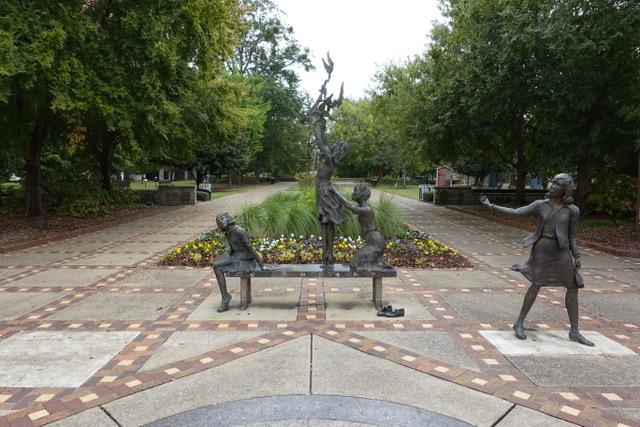
- Kelly Ingram Park: Walk the "Place of Revolution and Reconciliation," featuring powerful sculptures that depict the dogs, hoses, and incarceration faced by the protesters.
- 16th Street Baptist Church: View the exterior and attend services at this historic church, a focal point of the movement and the site of the devastating September 15, 1963, bombing.
- Birmingham Civil Rights Institute: Explore this world-class research and interpretive center (adjacent to the monument) that provides the comprehensive historical context of the movement.
- Fourth Avenue Historic District: Discover the heart of Birmingham’s Black business community during the era of Jim Crow, featuring the Carver Theatre and the Pythian Temple.
- The "Letter from Birmingham Jail" Connection: Reflect on the site's history, which inspired Dr. King’s seminal defense of non-violent resistance while he was incarcerated in the nearby city jail.
- St. Paul United Methodist Church: See another critical meeting place for the movement, located within the boundaries of the historic district.
Getting There
Birmingham Civil Rights National Monument is located in the northwest quadrant of downtown Birmingham, Alabama. The district is centered around the intersection of 6th Avenue North and 16th Street North.
By Car:
- From I-65 North or South: Take I-20/59 Northeast toward Atlanta. Exit at the 17th Street Exit (the first exit off I-20/59). Bear right and proceed to the traffic light. Drive two blocks south to 6th Avenue North. Turn right, and the Birmingham Civil Rights Institute and the monument area will be on your left.
- From Birmingham-Shuttlesworth International Airport (BHM): The monument is approximately 5 miles (10-15 minutes) west of the airport. Follow signs for I-20/59 West toward downtown and exit at 17th Street.
- Main Contact Point: While the A.G. Gaston Motel is the primary NPS structure, visitors should begin at the Birmingham Civil Rights Institute at 520 16th St N, Birmingham, AL 35203, for maps and brochures.
Nearest Airports:
- Birmingham-Shuttlesworth International Airport (BHM): The primary gateway, offering numerous daily flights and car rental services.
Public Transit:
- Birmingham MAX Bus: Several local bus lines serve the downtown area and have stops near the Civil Rights District.
- Zyp BikeShare: Birmingham offers a bike-sharing program with several stations located within the downtown area, making it easy to tour the monument by bike.
Parking: On-street metered parking is available throughout the historic district. There are also several public parking lots and garages located within a few blocks of Kelly Ingram Park and the Civil Rights Institute.
For more detailed maps and turn-by-turn directions, visit the official park directions page.
Best Time to Visit
Birmingham experiences a humid subtropical climate, with four distinct seasons and significant summer heat.
Spring (March - May): This is one of the most pleasant times to visit. Temperatures are typically in the 60s and 70s, and the city’s many gardens and parks are in bloom. March is particularly significant as it coincides with several Civil Rights commemorations and events.
Summer (June - August): Summers are hot and very humid. Temperatures frequently exceed 90 degrees Fahrenheit. Because much of the monument experience involves walking in Kelly Ingram Park and the surrounding streets, it is highly recommended to visit in the early morning or late afternoon. The Birmingham Civil Rights Institute is climate-controlled and offers a cool respite from the midday heat.
Fall (September - November): Autumn brings a welcome relief from the summer humidity. The weather is generally mild and clear, making it an excellent time for walking tours of the historic district. September 15th marks the anniversary of the 16th Street Baptist Church bombing, often featuring solemn memorial programs.
Winter (December - February): Winters are generally mild, but daytime temperatures can fluctuate from the 40s to the 60s. While snow is rare, cold and damp days are possible. The district is typically quieter during this season, providing a more solitary and reflective atmosphere.
Operating Hours: Kelly Ingram Park and the exterior of the historic buildings are accessible 24 hours a day. The NPS presence and passport stamping station are currently located within the Birmingham Civil Rights Institute, which is typically open Tuesday through Saturday (10:00 AM - 5:00 PM) and Sunday (1:00 PM - 5:00 PM). The interior of the A.G. Gaston Motel is currently undergoing restoration and has limited public access.
Activities and Adventures
The Birmingham Civil Rights National Monument is primarily a site for historical exploration, education, and social reflection.
Exploring Kelly Ingram Park: This is the centerpiece of the outdoor experience. A series of paved pathways wind through the park, taking visitors past powerful sculptures such as the "Four Spirits" memorial and the "Freedom March" depiction of the fire hoses. Interpretive signs provide the historical context for the events that occurred on these very grounds.
A.G. Gaston Motel Restoration: While the interior may be closed during ongoing restoration, visitors can view the exterior of this landmark building. It was the only first-class hotel in the city that served African Americans during segregation and was the strategic headquarters for the 1963 campaign.
Birmingham Civil Rights Institute: Although a separate entity, the Institute is an essential part of the visit. Its immersive museum takes visitors from the era of segregation through the height of the movement and into contemporary human rights struggles. It houses the actual jail cell door from Dr. King’s 1963 incarceration.
Walking the Civil Rights District: Use a brochure or the NPS app to take a self-guided walking tour. You can see the 16th Street Baptist Church, the historic Carver Theatre, and the numerous Black-owned businesses that formed the economic backbone of the community during Jim Crow.
Ranger Programs: During select times, National Park Service rangers or volunteers provide guided talks in Kelly Ingram Park. These programs offer deeper insights into the strategic planning of "Project C" and the impact of the images that emerged from Birmingham.
Junior Ranger Program: Children can participate in an educational program that teaches them about the concepts of non-violence, justice, and the importance of voting rights. Completing the activity booklet earns them a Junior Ranger badge.
History & Significance
The story of Birmingham in 1963 is a narrative of courage and the power of non-violent resistance.
Project C (Confrontation): In early 1963, the Southern Christian Leadership Conference (SCLC), led by Dr. King, joined forces with the Alabama Christian Movement for Human Rights (ACMHR) and its leader, Rev. Fred Shuttlesworth. Their goal was to use economic boycotts and direct action protests to force Birmingham’s merchants and city government to end segregation. "C" stood for confrontation—non-violent but direct.
The Children’s Crusade: By May 1963, many adults were unable to continue protesting due to the threat of losing their jobs. In a controversial move, the movement organizers began recruiting school children. Thousands of students walked out of their classrooms and into the streets. It was during these marches that Public Safety Commissioner "Bull" Connor utilized police dogs and fire hoses against the young protesters, images that galvanized national support for civil rights legislation.
16th Street Baptist Church Bombing: On September 15, 1963, just as the city was beginning to implement some desegregation measures, a bomb planted by members of the Ku Klux Klan exploded at the church. The blast killed Addie Mae Collins, Cynthia Wesley, Carole Robertson, and Denise McNair. This horrific act of terrorism shocked the world and became a major catalyst for the passage of the Civil Rights Act of 1964.
The Gaston Motel: Built by A.G. Gaston, one of the first African American millionaires, the motel was the only place in Birmingham where Black leaders could meet and stay safely. It was the site of the meeting that led to the decision for Dr. King to be arrested on Good Friday, 1963, which resulted in his famous "Letter from Birmingham Jail."
Lodging and Camping
Birmingham is a major metropolitan area with a wide range of lodging options for visitors.
In-Park Camping: There is no camping or traditional park lodging within the National Monument.
Nearby Accommodations: Several major national hotel chains are located within walking distance or a short drive of the Civil Rights District. These range from modern business hotels to boutique properties in historic buildings.
Dining: The downtown area and the nearby "Five Points South" neighborhood offer a vast array of dining options, from classic Southern soul food and barbecue to high-end contemporary cuisine. The district itself features several local cafes and restaurants that are part of the community’s ongoing revitalization.
Essential Information
Park Fees and Passes
- Entrance Fee: There is no fee to visit the Birmingham Civil Rights National Monument or Kelly Ingram Park. It is a free public site.
- Institute Fee: The Birmingham Civil Rights Institute is a separate non-profit and charges an admission fee. Check their website for current rates and ticket reservations.
Safety Considerations
- Urban Environment: As with any city visit, be aware of your surroundings and keep an eye on your personal belongings. The district is well-patrolled, but it is always best to stay in well-lit, populated areas.
- Heat and Humidity: The Alabama summer is intense. Always carry water and wear sun protection when walking through Kelly Ingram Park.
- Traffic: Be mindful of vehicle traffic when crossing the busy streets of the downtown area. Always use designated crosswalks.
- Respectful Conduct: The 16th Street Baptist Church is an active place of worship and a site of tragic memory. Please maintain a respectful and quiet demeanor when in its vicinity.
Services and Facilities
Public restrooms and water fountains are available within the Birmingham Civil Rights Institute during their operating hours. Kelly Ingram Park features paved, level pathways that are fully accessible to wheelchairs and strollers. Most of the historic district’s sidewalks are also accessible.
Contact
- Phone: 205-679-0065
- Email: [email protected]
- Official site: https://www.nps.gov/bicr/index.htm
Birmingham Civil Rights National Monument is a place that challenges us to remember and to act. It honors the ordinary citizens who did extraordinary things in the face of immense danger. By walking these streets and reflecting on these sites, visitors can gain a deeper appreciation for the resilience of the human spirit and the ongoing responsibility of each generation to protect and expand the promises of American democracy.
Park Overview
Detailed overview of the park's history, geography, and main attractions will go here. This section provides essential background information for visitors.
Top Hikes
- Iconic Summit TrailDifficulty: Strenuous • Distance: 8 miles round trip
Loading reviews…
- Waterfall LoopDifficulty: Moderate • Distance: 3 miles loop
Loading reviews…
- Lakeside WalkDifficulty: Easy • Distance: 1.5 miles out & back
Loading reviews…
Recommended Hiking Gear
Gear up for your adventure with our trusted partners. These items help support the site at no extra cost to you!

Places to Stay
- Historic Park LodgeBook early!Type: Lodge
Loading reviews…
- Riverside CampgroundReservations required.Type: Campground
Loading reviews…
- Gateway Town Hotel15 miles from entrance.Type: Nearby Hotel
Loading reviews…