Casa Grande Ruins National Monument
Fast Facts
Casa Grande Ruins National Monument
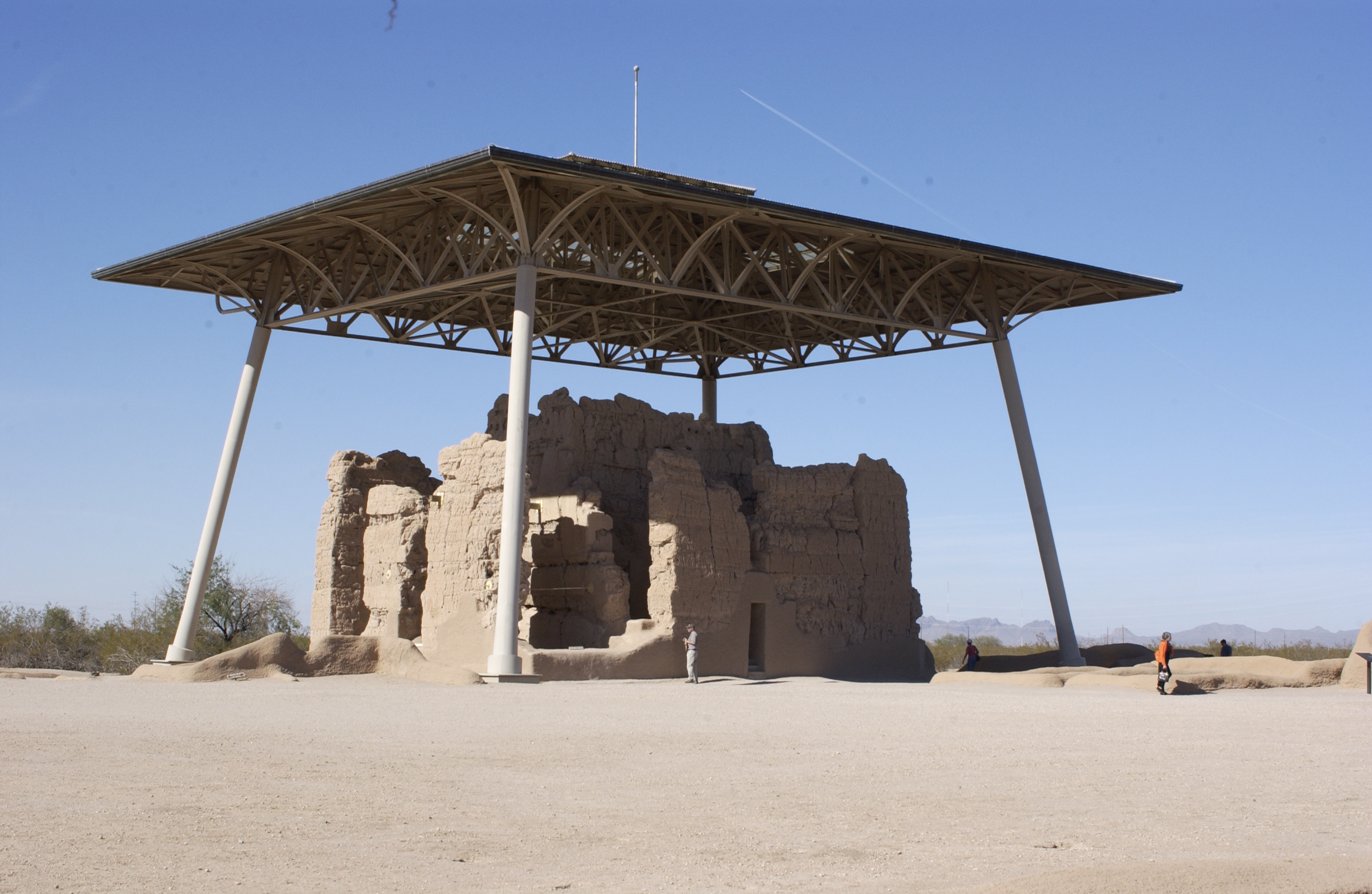
In the sun-drenched Gila River Valley of central Arizona, Casa Grande Ruins National Monument preserves a spectacular testament to the engineering and social complexity of the Ancestral Sonoran Desert People. The centerpiece of the monument is the "Great House" (Casa Grande in Spanish), a massive four-story earthen structure that has stood as a landmark in the desert for over 600 years. Built in the 1300s, this multi-story building is one of the largest and most mysterious prehistoric structures in North America, serving as a focal point for a thriving community that utilized one of the most extensive systems of irrigation canals in the ancient world.
The monument encompasses several compounds of caliche (a concrete-like natural soil) structures that once formed a bustling agricultural hub. The Ancestral Sonoran Desert People (often referred to as the Hohokam) were master farmers who transformed the arid desert into a productive landscape, growing corn, beans, and squash. The Great House itself is a masterpiece of earthen architecture, featuring thick walls made of layered caliche and precisely aligned openings that many believe served as astronomical markers for the seasons. Today, the ruins are protected by a distinctive, soaring roof structure designed by architect Frederick Law Olmsted Jr. in the 1930s, ensuring that these fragile walls remain for future generations to study and admire.
Visiting Casa Grande Ruins is an invitation to step back into a time of desert innovation and regional trade. Whether you are standing in the shadow of the Great House, exploring the museum’s collection of ancient pottery and jewelry, or walking the interpretive trails through the creosote and saltbush, the monument provides a profound connection to the people who first mastered life in the Sonoran Desert. It is a place of deep cultural significance to the descendant O'odham, Hopi, and Zuni peoples, offering a essential look at the foundations of civilization in the American Southwest.
Key Highlights
- The Great House: Marvel at the four-story earthen "skyscraper" of the 14th century, featuring massive caliche walls and mysterious astronomical alignments.
- Compound A: Explore the main residential and ceremonial core of the ancient community, featuring the remains of numerous smaller structures and plazas.
- Ancient Irrigation Canals: Learn about the hundreds of miles of hand-dug canals that diverted water from the Gila River to sustain thousands of people.
- Museum and Film: View original artifacts, including shell jewelry and intricately painted pottery, and watch the park film that recreates ancient life.
- The Modern Roof: See the iconic 1932 protective structure, a National Historic Landmark in its own right, designed to shield the ruins from the elements.
- Sonoran Desert Nature Trail: Walk through the unique desert flora surrounding the ruins and spot local wildlife like Gambel’s quail and desert spiny lizards.
- Ball Court: Discover the remains of a prehistoric ball court, indicating the social and ceremonial connections the community had with larger regional networks.
Getting There
Casa Grande Ruins National Monument is located in the city of Coolidge, Arizona, approximately midway between Phoenix and Tucson.
By Car:
- From Phoenix: Travel south on I-10 to Exit 185 (Highway 387). Follow Highway 387 east to Highway 87. Turn right (south) onto Highway 87/287 and drive into Coolidge. The monument entrance is on the west side of the road, well-marked with signs. The drive is approximately 1 hour.
- From Tucson: Head north on I-10 to Exit 211 (Highway 87). Follow Highway 87 north for about 20 miles into the town of Coolidge. Turn left onto Ruins Drive to enter the monument.
- Main Entrance: The physical address for the visitor center is 1100 W. Ruins Drive, Coolidge, AZ 85128.
Nearest Airports:
- Phoenix Sky Harbor International (PHX): The primary hub, located about 50 miles to the north.
- Tucson International Airport (TUS): Approximately 65 miles to the south.
Public Transit: There is no direct public transportation or shuttle service to the monument. A personal or rental vehicle is necessary for your visit. The monument is situated within an urbanizing area, making it a convenient stop for those traveling along the I-10 corridor.
Parking: Ample free parking is available for cars and RVs near the visitor center. Please note that the park gate closes 15 minutes prior to the official closing time.
For more detailed maps and turn-by-turn directions, visit the official park directions page.
Best Time to Visit
The Sonoran Desert climate is characterized by extreme summer heat and mild, pleasant winters.
Spring (March - May): This is the ideal time to visit. Temperatures are typically in the 70s and 80s, and the desert wildflowers and cacti may be in bloom. This is the peak season for guided tours and outdoor exploration.
Summer (June - August): Summers are intensely hot, with daytime highs frequently exceeding 100 or even 110 degrees Fahrenheit. Strenuous outdoor activity is not recommended during the middle of the day. The visitor center and museum are climate-controlled and offer a vital escape from the heat. Caution: This is the season for "haboobs"—massive dust storms that can appear suddenly and make driving extremely dangerous.
Fall (September - November): Autumn brings a welcome relief from the summer heat. The days remain warm and sunny, with temperatures in the 80s and 90s, while the humidity drops. This is an excellent time for photography and attending special events.
Winter (December - February): Winters are mild and beautiful, with daytime temperatures in the 60s and 70s. This is the busiest time of year at the monument. While nights can be cool, the days are perfect for walking the grounds and participating in ranger-led talks.
Operating Hours: The monument is typically open daily from 9:00 AM to 4:00 PM. It is closed on Juneteenth, Independence Day, Thanksgiving, and Christmas Day. Always check the park’s website or call 520-723-3172 for current hours before your visit.
Activities and Adventures
A visit to Casa Grande Ruins is primarily focused on historical exploration, archaeological study, and cultural reflection.
Exploring the Ruins: Most visitors begin with a self-guided walk of Compound A. Paved paths lead you around the base of the Great House and through the foundations of the surrounding rooms. Detailed interpretive signs provide the historical context for each structure. Audio guides are often available to provide a deeper narrative.
Ranger-Guided Tours: During the cooler winter and spring months, rangers lead guided walks to the Great House. These tours offer the most in-depth information about the architecture, the irrigation systems, and the theories regarding the building’s purpose. Check the daily schedule at the visitor center desk.
Museum and Theater: The visitor center features a comprehensive museum with artifacts excavated from the site, including bone tools, shell jewelry, and complex pottery. The 20-minute park film provides a visual reconstruction of what the community might have looked like during its peak in the 1300s.
Nature and Birdwatching: The desert surrounding the ruins is home to a variety of resilient species. You can often spot great horned owls nesting in the rafters of the modern roof, as well as round-tailed ground squirrels and various migratory birds. The Sonoran Desert nature trail identifies the plants that were essential for the ancient people’s survival.
Junior Ranger Program: Children can participate in an educational program that focuses on archaeology, desert farming, and the importance of preserving ancient sites. Completing the activity booklet earns them a Junior Ranger badge.
Photography: The Great House is one of the most photographed prehistoric sites in the Southwest. The contrast between the massive earthen walls and the soaring geometry of the modern roof provides unique opportunities. The "golden hour" in the late afternoon offers the best light for highlighting the textures of the caliche.
History & Significance
The story of Casa Grande is a narrative of adaptation and regional connection.
Ancestral Sonoran Desert People: From roughly 450 CE to 1450 CE, this region was the home of a sophisticated culture. They were unique among ancient Southwestern people for their focus on large-scale irrigation. They dug hundreds of miles of canals using only stone tools and wooden digging sticks, some of which were over 12 feet deep and 80 feet wide.
The Great House (1350 CE): The Casa Grande was built toward the end of the community’s occupation of the site. It was constructed of "caliche"—a natural concrete-like substance found below the desert soil. The walls are over four feet thick at the base. The building’s exact purpose remains a mystery, but theories range from a grain storage facility and a defensive tower to an astronomical observatory or a residence for high-status leaders.
Abandonment and Legacy: Around 1450 CE, the community at Casa Grande began to disperse. A combination of drought, social shifts, and soil salinization from the irrigation may have contributed to their move. These people are the direct ancestors of the modern Akimel O'odham (Pima) and Tohono O'odham peoples, who still live in the Gila River valley today.
First Protected Site: In 1892, President Benjamin Harrison established Casa Grande as the first prehistoric and cultural site to be protected by the United States government. This move paved the way for the Antiquities Act and the creation of the National Park Service. The construction of the modern roof in 1932 was a landmark effort in early historic preservation.
Lodging and Camping
While there is no camping or lodging within the monument itself, the surrounding area offers several options.
In-Park Camping: Not available.
Nearby Accommodations: The town of Coolidge (adjacent to the monument) and the nearby city of Casa Grande (20 miles west) offer a variety of hotels, motels, and RV parks. Both cities provide a full range of dining and service options.
State Parks: For those looking to camp in a more natural setting, Picacho Peak State Park is located about 30 miles to the south and offers developed campgrounds, hiking, and spectacular desert views.
Dining: The town of Coolidge features numerous restaurants ranging from casual cafes to traditional Mexican cuisine. There are no food services within the monument grounds, but a pleasant picnic area is located near the parking lot.
Essential Information
Park Fees and Passes
- Entrance Fee: There is no fee to enter Casa Grande Ruins National Monument or its visitor center. It is a free public facility.
- Passes: While the monument is free, the visitor center bookstore sells "America the Beautiful" passes for use at fee-charging National Parks across the country.
Safety Considerations
- Heat and Hydration: This is the most significant danger. Carry and drink plenty of water, even if you are only doing the short self-guided walk.
- Dust Storms (Monsoons): If a dust storm (haboob) approaches while you are driving, pull completely off the road and turn off your lights. Wait for the storm to pass.
- Historic Preservation: Help protect the site by not climbing on the ruins or touching the fragile caliche walls. Do not remove any artifacts, including pottery shards or stones.
- Respectful Conduct: Casa Grande is a sacred site to many Indigenous people. Please maintain a quiet and respectful demeanor.
- Wildlife: Be aware of your surroundings, as scorpions and snakes are native to the Sonoran Desert. Stay on the paved paths.
Services and Facilities
The Visitor Center and Museum are fully accessible and include restrooms and water fountains. All trails within the monument are paved and level, making them fully accessible to wheelchairs and strollers. The picnic area also features accessible tables.
Contact
- Phone: 520-723-3172
- Email: [email protected]
- Official site: https://www.nps.gov/cagr/index.htm
Casa Grande Ruins National Monument offers a profound journey into the heart of the ancient Southwest. By standing before the Great House and learning about the massive irrigation systems that once fed a desert civilization, visitors can gain a deeper appreciation for the ingenuity and resilience of America's first architects. It is a place of enduring mystery and quiet majesty on the edge of the Gila River.
Park Overview
Detailed overview of the park's history, geography, and main attractions will go here. This section provides essential background information for visitors.
Top Hikes
- Iconic Summit TrailDifficulty: Strenuous • Distance: 8 miles round trip
Loading reviews…
- Waterfall LoopDifficulty: Moderate • Distance: 3 miles loop
Loading reviews…
- Lakeside WalkDifficulty: Easy • Distance: 1.5 miles out & back
Loading reviews…
Recommended Hiking Gear
Gear up for your adventure with our trusted partners. These items help support the site at no extra cost to you!

Places to Stay
- Historic Park LodgeBook early!Type: Lodge
Loading reviews…
- Riverside CampgroundReservations required.Type: Campground
Loading reviews…
- Gateway Town Hotel15 miles from entrance.Type: Nearby Hotel
Loading reviews…