Cedar Breaks National Monument
Fast Facts
Cedar Breaks National Monument
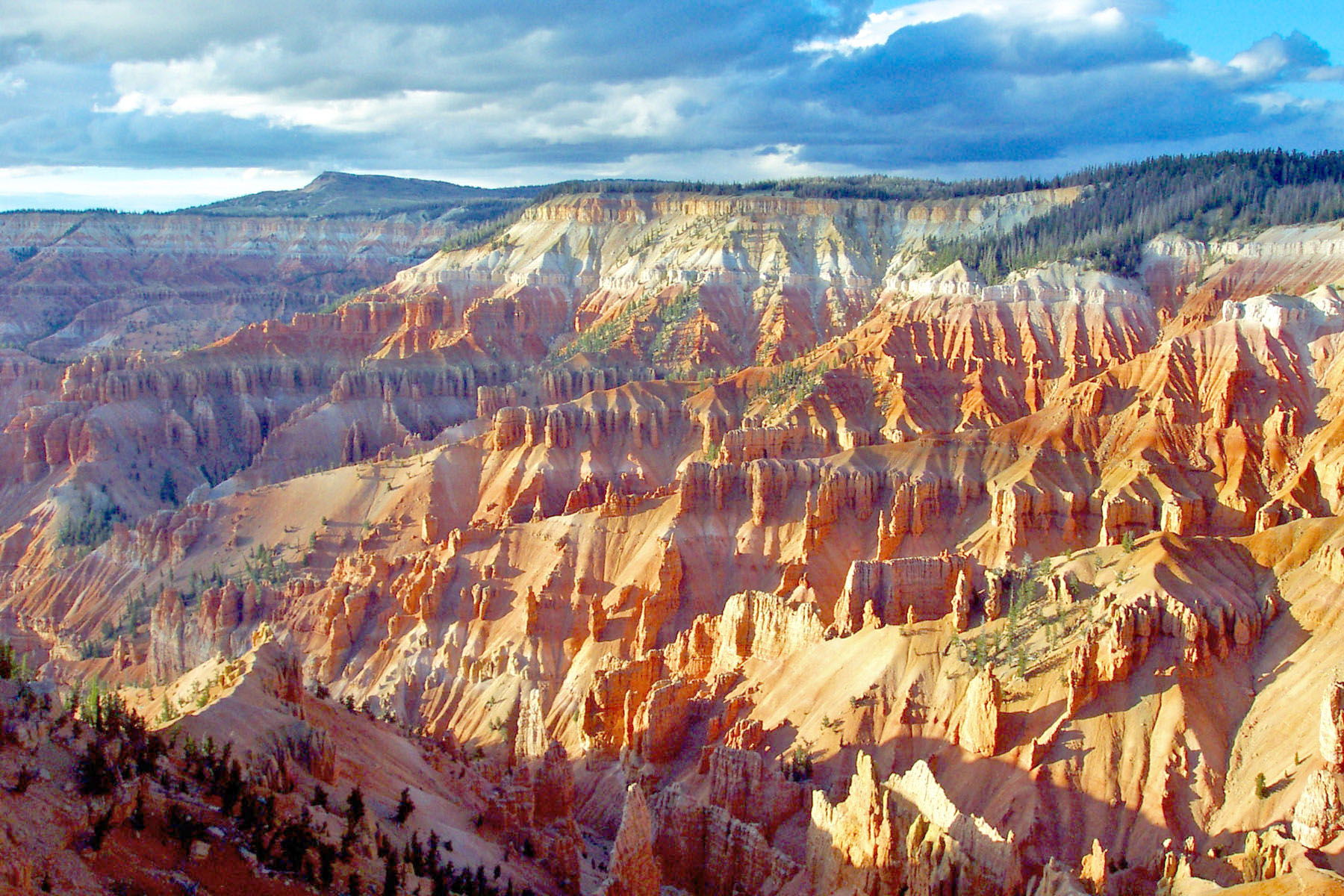
Crowning the top of the Grand Staircase in southwestern Utah, Cedar Breaks National Monument preserves a landscape of staggering scale and high-alpine beauty. At an elevation of over 10,000 feet, the monument looks down into a colossal natural amphitheater that stretches three miles across and drops more than 2,000 feet into the Markagunt Plateau. The name "Cedar Breaks" is a double misnomer; early settlers mistook the native Utah junipers for cedars and used the term "breaks" to describe the steep, rugged terrain that dropped away from the plateau. Today, the park is celebrated for its spectacular display of geological force, its ancient forests, and some of the most vibrant wildflower meadows in the American West.
The amphitheater is a study in color and erosion, carved from the multi-hued limestone of the Claron Formation—the same layer that created the hoodoos of Bryce Canyon. Here, the elements of ice, water, and wind have sculpted a labyrinth of fins, spires, and pinnacles in shades of pink, orange, and deep red. Because of its extreme elevation, Cedar Breaks offers a unique high-altitude ecosystem, featuring subalpine forests of Engelmann spruce and subalpine fir, and stands of ancient bristlecone pines—some of which have survived for over 2,000 years. It is a place where the seasons are compressed, where the summer is a brief explosion of life and the winter is a long, silent reign of deep snow.
Visiting Cedar Breaks is a transformative experience that rewards those who seek the "high country." Whether you are peer over the rim at Point Supreme, walking among the twisted trunks of the bristlecone pines, or attending the world-famous Wildflower Festival in July, the monument provides a profound connection to the elemental power of the natural world. It is a sanctuary of clear air, immense views, and some of the darkest night skies in the country, preserved as a crown jewel of the Utah plateau.
Key Highlights
- The Amphitheater Overlooks: Experience the scale of the 2,000-foot-deep chasm from spectacular vantage points like Point Supreme, Sunset View, and Chessmen Ridge.
- Ancient Bristlecone Pines: Hike to the Spectra Point or Ramparts overlooks to see some of the oldest living organisms on Earth, clinging to the rocky rim.
- Wildflower Festival: Witness the spectacular bloom of over 150 species of wildflowers, including bluebells, columbines, and Indian paintbrush (peak season is July).
- International Dark Sky Park: Enjoy incredible stargazing and ranger-led astronomy programs in a region designated for its exceptional lack of light pollution.
- Alpine Pond Trail: Explore a 2-mile loop through subalpine forests and meadows, leading to a serene mountain pond and spectacular views of the breaks.
- Point Supreme Campground: Spend a night at 10,000 feet in one of the most scenic campgrounds in the National Park System, surrounded by wildflowers and spruce trees.
- Winter Recreation: Experience the monument in its silent season with world-class opportunities for cross-country skiing, snowshoeing, and snowmobiling.
Getting There
Cedar Breaks National Monument is located in southwestern Utah, situated between the towns of Cedar City, Panguitch, and Brian Head.
By Car:
- From Cedar City, UT (I-15): Travel east on UT Highway 14 for approximately 18 miles. Turn north onto UT Highway 148. The monument entrance is about 4 miles ahead. The drive is a steep, scenic climb that gains nearly 4,000 feet of elevation.
- From Panguitch, UT: Head south on US Highway 89 to the junction with UT Highway 143. Follow Highway 143 west through the town of Brian Head to the northern entrance of the monument.
- Main Access: The primary road through the park is UT Highway 148 (Cedar Breaks Scenic Byway). Note: This road is typically closed to vehicles from mid-October through late May due to heavy snow.
- Visitor Center Location: The Point Supreme Information Center is located at 4730 South Highway 148, Brian Head, UT 84719.
Nearest Airports:
- Cedar City Regional Airport (CDC): Located about 25 miles from the monument, offering regional flights from Salt Lake City.
- St. George Regional Airport (SGU): Approximately 1.5 hours to the southwest.
- Harry Reid International Airport (LAS): The nearest major international hub, located in Las Vegas, about 3 hours away.
Public Transit: There is no direct public transportation to the monument. A personal or rental vehicle is essential. Note that large RVs and trailers should use caution on the steep, winding roads leading to the park.
For more detailed maps and current road closure status, visit the official park directions page.
Best Time to Visit
The experience at Cedar Breaks is entirely dictated by its 10,000-foot elevation, resulting in a very short summer season.
Spring (late May - June): Spring arrives late at Cedar Breaks. The road typically opens in late May, but snowbanks can remain 10 feet high along the edges. This is a time of awakening, as the first wildflowers (like the glacier lily) begin to poke through the melting snow. Temperatures are cool (40s to 50s).
Summer (July - August): This is the peak visitor season and the only time to see the full wildflower display. The weather is pleasant, with daytime highs in the 60s and 70s—usually 15-20 degrees cooler than the surrounding desert valleys. Afternoon thunderstorms are common and can move in quickly. This is the best time for hiking and attending ranger programs.
Fall (September - mid-October): Many consider autumn to be the best time to visit. The air is crisp and clear, and the quaking aspens on the plateau turn a brilliant gold, providing a stunning contrast to the red rock. Crowds thin out significantly. The road and facilities typically close for the winter around mid-October.
Winter (November - April): Winter turns the monument into a quiet, frozen wonderland. Heavy snow (often over 200 inches annually) makes the road impassable to cars. The park remains open for non-motorized recreation like snowshoeing and skiing, and for snowmobiling on the groomed road. The silence and the snow-capped formations provide a unique perspective.
Operating Hours: The monument is open 24 hours a day year-round. The Information Center and restrooms are typically open daily from 9:00 AM to 5:00 PM during the summer season (late May through October). No facilities are available within the park during the winter.
Activities and Adventures
Cedar Breaks is a destination for high-altitude exploration, nature study, and spectacular sightseeing.
Hiking the Rim: The monument features several miles of well-maintained trails. The Spectra Point and Ramparts Overlook Trail (4 miles round-trip) is a must-do, taking you along the rim to see the ancient bristlecone pines and the deepest parts of the amphitheater. The Alpine Pond Trail (2-mile loop) is an easier walk through forests and meadows, perfect for families.
Sightseeing the Overlooks: Driving the Cedar Breaks Scenic Byway (UT 148) allows you to stop at four major overlooks. Point Supreme offers the most comprehensive view of the amphitheater and features the information center. Chessmen Ridge provides a unique angle on the spires that resemble giant chess pieces.
Wildflower Viewing: During the peak of July, the monument is one of the premier spots in the U.S. for wildflower photography. The park hosts the Cedar Breaks Wildflower Festival, which includes guided walks and talks that help visitors identify the dozens of species in bloom.
Stargazing: Certified as an International Dark Sky Park in 2017, Cedar Breaks offers some of the best night sky viewing in the world. During the summer, rangers and volunteers host frequent "Star Parties" with high-powered telescopes at the Point Supreme area. The lack of atmospheric interference at 10,000 feet makes the stars appear exceptionally bright.
Winter Recreation: For the adventurous, the monument is a world-class winter destination. You can snowshoe from the Brian Head side to the North View overlook or ski the groomed park road. The contrast of the white snow against the red rock is a photographer's dream.
Junior Ranger Program: Children can participate in an educational program that focuses on subalpine ecology, the life of a bristlecone pine, and the geology of the breaks. Completing the activity booklet earns them a Junior Ranger badge.
History & Geology
The story of Cedar Breaks is a narrative of deep time and high-altitude resilience.
The Claron Formation: The colorful rocks of the amphitheater were formed approximately 60 million years ago when this area was the site of a massive freshwater lake. Sediments—including iron and manganese minerals—were deposited and later compressed into limestone. As the Colorado Plateau was uplifted, the forces of erosion began carving the "breaks" we see today.
Ancient Bristlecone Pines: These trees are among the most remarkable features of the monument. Growing in the harsh, rocky soil along the rim, they have adapted to survive extreme winds and freezing temperatures. Some of the trees at Cedar Breaks are estimated to be over 2,000 years old, their twisted, weathered wood a testament to their endurance.
Indigenous Heritage: Archaeological evidence shows that Indigenous groups, including the Southern Paiute, utilized the plateau for thousands of years for summer hunting and gathering. They call the region Paan'gung, and it remains a place of spiritual significance to their culture.
Establishment as a National Monument: Cedar Breaks was established as a National Monument in 1933 by President Franklin D. Roosevelt. During the 1930s, the Civilian Conservation Corps (CCC) built much of the early infrastructure, including the historic log information center and the trails that visitors still use today.
Lodging and Camping
Staying at Cedar Breaks requires choosing between the high-alpine experience of the park or the nearby mountain resorts.
In-Park Camping:
- Point Supreme Campground: Features 30 sites for both tents and RVs (no hookups). It is located at 10,000 feet and is surrounded by meadows. It is highly popular and should be reserved well in advance through Recreation.gov. It is typically open from mid-June through September.
Nearby Accommodations:
- Brian Head, UT (3 miles north): A major ski resort town that offers a range of hotels, condos, and vacation rentals year-round.
- Cedar City, UT (25 miles west): Provides a full range of national hotel chains, motels, and bed and breakfasts.
- Panguitch, UT (25 miles east): Features local lodging and guesthouses.
Dining: There are no food services within the monument. The nearby town of Brian Head has several restaurants and a general store. It is highly recommended to bring a picnic lunch to enjoy at the park’s designated picnic area near Point Supreme.
Essential Information
Park Fees and Passes
- Entrance Fee: $25 per private vehicle, valid for 7 days.
- Passes: Cedar Breaks accepts all "America the Beautiful" passes. The park also sells its own annual pass for $45.
Safety Considerations
- Altitude: The monument is at 10,000 feet. Visitors from lower elevations should be aware of the signs of altitude sickness. Drink plenty of water and pace yourself.
- Lightning: The rim is extremely vulnerable to lightning. If you hear thunder or see dark clouds, leave the exposed overlooks and trails immediately.
- Weather: Conditions can change in minutes. Carry warm layers and rain gear, even in mid-summer.
- Winter Hazards: During the winter, you must be prepared for sub-zero temperatures and white-out conditions. Always check the weather forecast before heading out.
- Historic Preservation: Help protect the bristlecone pines and the fragile rim. Do not climb on the ancient trees or go beyond the safety fences at the overlooks.
Services and Facilities
The Information Center and restrooms at Point Supreme are fully accessible. Most of the main overlooks are wheelchair accessible via paved paths. The Alpine Pond and Spectra Point trails have significant grades and uneven terrain and are not fully wheelchair accessible.
Contact
- Phone: 435-986-7120
- Email: [email protected]
- Official site: https://www.nps.gov/cebr/index.htm
Cedar Breaks National Monument is a place of profound inspiration and quiet majesty. By standing on its rim and witnessing the incredible colors of the amphitheater or walking among the ancient pines, visitors can connect with the immense power of time and nature. It is a destination that rewards the curious and provides a lasting connection to the wild heart of the American West.
Park Overview
Detailed overview of the park's history, geography, and main attractions will go here. This section provides essential background information for visitors.
Top Hikes
- Iconic Summit TrailDifficulty: Strenuous • Distance: 8 miles round trip
Loading reviews…
- Waterfall LoopDifficulty: Moderate • Distance: 3 miles loop
Loading reviews…
- Lakeside WalkDifficulty: Easy • Distance: 1.5 miles out & back
Loading reviews…
Recommended Hiking Gear
Gear up for your adventure with our trusted partners. These items help support the site at no extra cost to you!

Places to Stay
- Historic Park LodgeBook early!Type: Lodge
Loading reviews…
- Riverside CampgroundReservations required.Type: Campground
Loading reviews…
- Gateway Town Hotel15 miles from entrance.Type: Nearby Hotel
Loading reviews…