Charles Young Buffalo Soldiers National Monument
Fast Facts
Charles Young Buffalo Soldiers National Monument
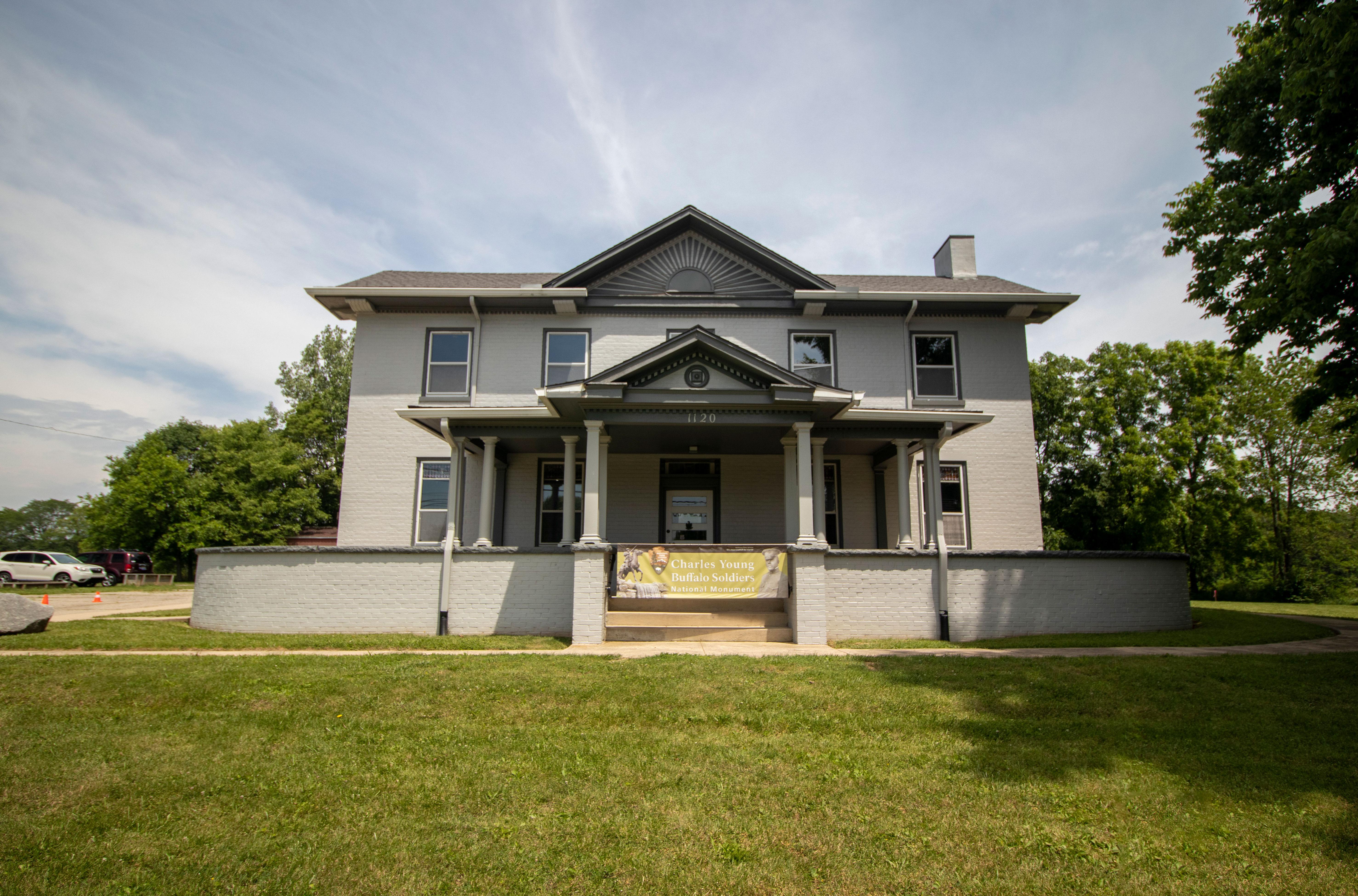
In the historic academic community of Wilberforce, Ohio, the Charles Young Buffalo Soldiers National Monument preserves the residence and legacy of one of the most remarkable leaders in American military history. Colonel Charles Young (1864-1922) was a man who spent his entire life overcoming seemingly insurmountable obstacles. Born into slavery in Kentucky, he rose through the ranks of the U.S. Army to become the third African American to graduate from West Point and the highest-ranking Black officer in the regular army until his death. The monument is centered on "Youngsholm," the elegant 19th-century home where Young lived, mentored students at Wilberforce University, and planned his tactical and conservation initiatives.
Youngsholm was more than just a family home; it was a sanctuary and a center of intellectual leadership. As a legendary leader of the "Buffalo Soldiers"—the segregated African American regiments of the post-Civil War era—Young served with distinction in the American West, the Philippines, and Mexico. In 1903, he made history as the first African American national park superintendent, managing Sequoia National Park and overseeing the construction of the first road into the Giant Forest. Today, the monument honors not only his military prowess but also his "steadfast devotion to duty" and his role as a pioneer in the American conservation movement.
Visiting the Charles Young Buffalo Soldiers National Monument is an opportunity to reflect on the meaning of service, leadership, and resilience in the face of overt racism. The site offers a tangible connection to the era of the Buffalo Soldiers, whose contributions were vital to the expansion of the United States and the protection of its first national parks. Whether you are exploring the museum exhibits within Youngsholm or walking the grounds where he once trained his students, the monument provides a profound and inspiring look at a man who led by example and continues to inspire new generations of leaders.
Key Highlights
- Youngsholm: Visit the historic home of Colonel Charles Young, which served as his family residence and a social hub for the Wilberforce community.
- Buffalo Soldier Legacy: Discover the comprehensive history of the segregated African American regiments and their crucial roles in the frontier wars and the Philippines.
- Conservation Pioneer: Learn about Young’s 1903 tenure at Sequoia National Park, where his leadership proved that the protection of natural resources was a mission for all Americans.
- Wilberforce University Connection: Explore the deep ties between Colonel Young and the nation’s first private, historically Black university, where he served as a professor of military science.
- NAACP Spingarn Medal: View exhibits detailing Young’s high honors and his status as a nationally respected voice for racial uplift and civil rights.
- Military Career Artifacts: See original photographs and documents that chronicle Young’s rise from a second lieutenant to a full colonel during a time of intense systemic inequality.
- Restoration Excellence: Admire the multi-year restoration of the house, which has returned "Youngsholm" to its 1920s appearance, complete with period-accurate details.
Getting There
The monument is located in Wilberforce, Ohio, situated along the historic U.S. Route 42 corridor in Greene County.
By Car:
- From Columbus, OH: Travel west on I-70 to I-675 South. Exit onto US Highway 35 East toward Xenia. Follow US 35 to the North Detroit Street exit in Xenia and turn north on US Highway 42. Proceed approximately 4 miles to Wilberforce; the monument is on the north side of the road.
- From Dayton, OH: Head east on US Highway 35 to Xenia, then follow US Highway 42 North for about 4 miles.
- From Cincinnati, OH: Take I-71 North to I-675 North. Exit onto US Highway 35 East and follow the directions from Xenia.
- Main Entrance: The physical address for Youngsholm is 1120 U.S. Route 42 E, Wilberforce, OH 45384.
Nearest Airports:
- Dayton International Airport (DAY): The closest major airport, located approximately 35-40 minutes from the monument.
- John Glenn Columbus International (CMH): Approximately 1 hour and 15 minutes to the east.
Public Transit: While the city of Xenia is served by local bus routes, there is no direct public transportation that stops at the monument. A personal or rental vehicle is necessary for your visit. The monument is situated within a few blocks of the Wilberforce University and Central State University campuses, making it accessible via a moderate walk for those visiting the universities.
Parking: Free parking is available in a paved lot adjacent to Youngsholm. There is designated parking for cars and small buses.
For more detailed maps and turn-by-turn directions, visit the official park directions page.
Best Time to Visit
Southwest Ohio experiences a humid continental climate, with four distinct seasons that affect the accessibility and outdoor experience of the monument.
Spring (April - June): Spring is a season of transition and growth. The grounds of Youngsholm are particularly beautiful as the gardens begin to bloom. Temperatures are typically mild (50s to 70s), though rain is frequent. This is an excellent time for visiting before the summer heat.
Summer (July - August): Summer is the peak visitor season. The weather is warm and can be very humid, with temperatures frequently reaching the 80s and 90s. Youngsholm is climate-controlled, offering a comfortable environment for exploring the museum. This is the busiest time for family reunions and groups visiting the nearby universities.
Fall (September - November): Many consider autumn to be the ideal season for a visit. The air is crisp and clear, and the fall foliage on the mature trees surrounding the house is spectacular. The summer humidity fades, making for very comfortable conditions for walking the grounds.
Winter (December - March): Winter turns the monument into a quiet and somber retreat. Temperatures can drop below freezing, and the region receives an average of 22 inches of snow annually. While the grounds remain open daily, the visitor center may have reduced hours. The sight of the grey house under a blanket of snow is a poignant image.
Operating Hours: The monument grounds are open daily from sunrise to sunset. Youngsholm (the Visitor Center) is typically open Friday through Sunday from 9:00 AM to 4:00 PM. The site is closed on all major federal holidays, including Thanksgiving, Christmas, and New Year's Day.
Activities and Adventures
The Charles Young National Monument is primarily a site for historical exploration, education, and social reflection.
Guided Tours of Youngsholm: A guided tour is the best way to experience the monument. National Park Service rangers provide in-depth context on Young’s family life, his musical talents (he was an accomplished composer and pianist), and the various missions he led around the globe. Tours take you through the restored parlors and exhibit rooms of the first floor.
Exploring the Museum Exhibits: The museum features high-quality displays on the history of the 9th and 10th Cavalry and the 24th and 25th Infantry—the original Buffalo Soldier regiments. You can learn about the challenges of the frontier and the personal stories of the men who served under Young’s command.
Walking the Historic Grounds: Take a self-guided walk around the exterior of the house. See the large granite boulder with the historic plaque that marks the site’s status as a National Historic Landmark. The grounds offer a peaceful environment for reflecting on Young’s philosophy of "duty, honor, country."
Educational Films: The visitor center features a park film that provides a cinematic overview of Young's life. This is an essential starting point for any visit, as it sets the stage for the museum exhibits and the guided tours.
Junior Ranger Program: Children can participate in an educational program that focuses on the concepts of leadership, perseverance, and the history of the Buffalo Soldiers. Completing the activity booklet earns them a Junior Ranger badge.
Photography: The architecture of Youngsholm, the Buffalo Soldier monuments, and the serene landscape of Wilberforce offer excellent subjects for photography. The "golden hour" in the late afternoon provides the best light for the house's unique grey facade.
Community Engagement: The monument frequently hosts special events in partnership with Wilberforce University and local historical societies. These may include "Living History" demonstrations, guest speaker series, and musical performances that celebrate the African American experience.
History & Significance
The story of Charles Young is a narrative of exceptionalism in a time of institutionalized exclusion.
The West Point Struggle: When Young entered West Point in 1884, he was one of only a few Black cadets. For five years, he endured the "silence"—a tactic where white cadets refused to speak to him—and faced constant academic and social challenges. His graduation in 1889 was a monumental achievement that proved his intellectual and moral fortitude.
Leader of the Buffalo Soldiers: Young spent much of his career commanding troops in the 9th Cavalry. He earned a reputation as a "soldier's officer," known for his tactical brilliance and his concern for the well-being of his men. His service in the Philippines during the Insurrection and in Mexico during the Punitive Expedition further solidified his status as one of the army's most capable field officers.
Military Attaché and Diplomat: Young served as the first African American military attaché to both Haiti and Liberia. In these roles, he combined his military skills with diplomatic finesse, working to modernize the Liberian Frontier Force and representing the United States with dignity on the international stage.
Forced Retirement and the Last Ride: In 1917, as the U.S. entered WWI, Young was the highest-ranking Black officer and expected a combat command. Instead, the army forced him into medical retirement. To prove his fitness, Young famously rode a horse 497 miles from Wilberforce to Washington D.C. While he was eventually reinstated, he was denied the chance to lead troops in France, a testament to the deep-seated prejudice of the era.
A Lasting Legacy: Colonel Young died in 1922 while on duty in Nigeria. He was eventually buried with full military honors at Arlington National Cemetery. The establishment of the National Monument in 2013 ensures that his home in Ohio remains a place where the full story of his life—and the stories of all Buffalo Soldiers—will be told for generations to come.
Lodging and Camping
Wilberforce is a small academic community; however, the surrounding region offers several lodging options.
In-Park Camping: Not available.
Nearby Accommodations:
- Xenia, OH (4 miles south): Features several national hotel chains and modern motels.
- Yellow Springs, OH (10 miles north): A charming village known for its independent inns, bed and breakfasts, and vibrant downtown scene.
- Dayton, OH (20 miles west): Offers a full range of world-class lodging and dining.
Dining: The town of Xenia features numerous restaurants ranging from casual cafes to local grills. Yellow Springs is a culinary destination with several farm-to-table restaurants and award-winning bakeries. There are no food services within the monument grounds, but several picnic tables are available near the parking lot.
Essential Information
Park Fees and Passes
- Entrance Fee: There is no fee to enter Charles Young Buffalo Soldiers National Monument or Youngsholm. It is a free public facility.
- Passes: While the park is free, the visitor center bookstore sells "America the Beautiful" passes for use at fee-charging National Parks across the country.
Safety Considerations
- Urban Safety: As with any site near an academic campus, be aware of your surroundings and keep your vehicle locked.
- Heat and Humidity: The Ohio summer is humid. Stay hydrated and utilize the air-conditioned museum during the midday heat.
- Traffic: US Route 42 is a busy public highway. Use extreme caution when entering and exiting the monument parking lot.
- Historic Preservation: Help protect Youngsholm by not touching the historic wallpaper or artifacts. Do not remove any stones or plants from the grounds.
- Respectful Conduct: The monument is a place of historical honor. Please maintain a quiet and respectful demeanor during your visit.
Services and Facilities
The Visitor Center (Youngsholm) is fully accessible and includes public restrooms, a museum, and a bookstore. Most of the grounds around the house are level and accessible via paved or gravel paths. The interior of the house features a ramp for first-floor access.
Contact
- Phone: 937-352-6757
- Email: [email protected]
- Official site: https://www.nps.gov/chyo/index.htm
Charles Young Buffalo Soldiers National Monument is a place that challenges us to look beyond the uniform to see the character of the man. By exploring his home and reflecting on his journey, visitors can gain a deeper appreciation for the resilience, talent, and patriotism of those who served their country even when their country did not fully recognize their citizenship. It is a destination of profound history and enduring inspiration in the heart of Ohio.
Park Overview
Detailed overview of the park's history, geography, and main attractions will go here. This section provides essential background information for visitors.
Top Hikes
- Iconic Summit TrailDifficulty: Strenuous • Distance: 8 miles round trip
Loading reviews…
- Waterfall LoopDifficulty: Moderate • Distance: 3 miles loop
Loading reviews…
- Lakeside WalkDifficulty: Easy • Distance: 1.5 miles out & back
Loading reviews…
Recommended Hiking Gear
Gear up for your adventure with our trusted partners. These items help support the site at no extra cost to you!

Places to Stay
- Historic Park LodgeBook early!Type: Lodge
Loading reviews…
- Riverside CampgroundReservations required.Type: Campground
Loading reviews…
- Gateway Town Hotel15 miles from entrance.Type: Nearby Hotel
Loading reviews…