Amache National Historic Site
Fast Facts
Amache National Historic Site
Standing on a wind-swept terrace above the Arkansas River Valley in southeastern Colorado, Amache National Historic Site preserves a difficult but essential chapter of American history. Also known as the Granada Relocation Center, this site was one of ten relocation centers established by the War Relocation Authority during World War II. Between 1942 and 1945, over 10,000 people of Japanese ancestry—two-thirds of whom were American citizens—were unjustly incarcerated here following the signing of Executive Order 9066. Today, the site serves as a somber monument to the fragility of civil rights and the resilience of the human spirit in the face of prejudice and hardship.
Amache was the smallest of the ten incarceration camps, yet at its peak, it was the tenth-largest city in Colorado. The landscape is characterized by the vast, open horizons of the High Plains, where the climate is arid and the weather is often extreme. Despite the harsh conditions and the loss of their homes and livelihoods on the West Coast, the incarcerees at Amache transformed the site into a functioning community. They established schools, a silk-screen shop, and a massive agricultural operation that provided food for both the camp and the surrounding region. They even built intricate traditional Japanese gardens amidst the sagebrush and sand, creating pockets of beauty and serenity within a place of confinement.
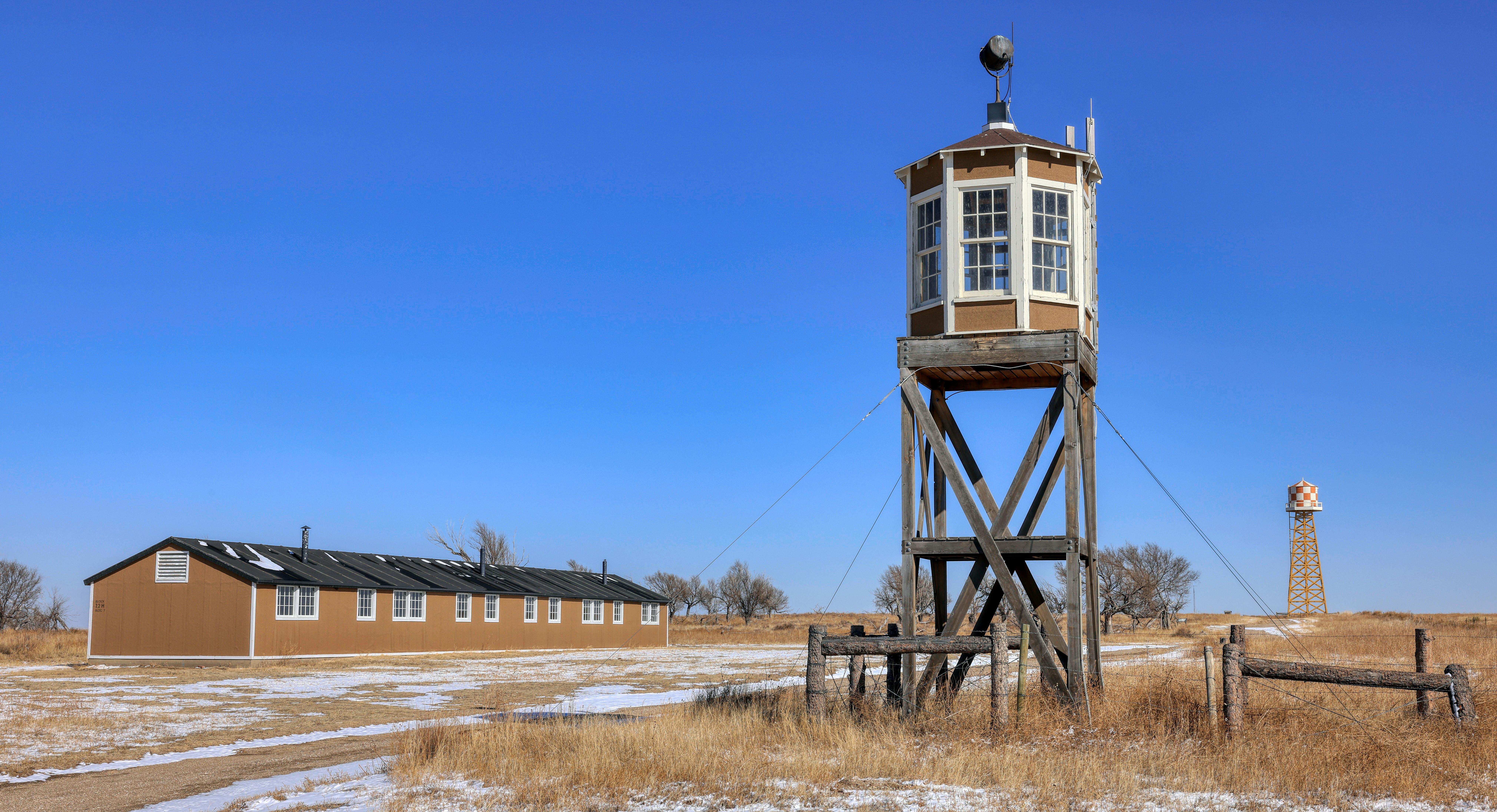
In 2022, Amache was officially designated as a National Historic Site, ensuring that the stories of those who were imprisoned here will be preserved for future generations. While many of the original buildings were removed or destroyed after the war, the site remains a powerful archaeological landscape. Visitors can still see the original building foundations, the camp's cemetery, and several reconstructed structures, including a barracks, a guard tower, and a water tower. Walking the quiet, grid-like streets of the former camp provides a profound opportunity for reflection on the meanings of democracy, justice, and citizenship.
Key Highlights
- Reconstructed Barracks and Guard Tower: View authentic reconstructions that provide a tangible sense of the physical conditions and the constant surveillance experienced by the incarcerees.
- Amache Cemetery: Visit the historic cemetery and memorial, a place of deep spiritual and emotional significance for the descendants of those who lived at Amache.
- Original Foundations and Grid: Walk or drive along the original camp streets, where the concrete foundations of mess halls and laundry buildings serve as silent markers of a lost city.
- Japanese Gardens Archaeology: Discover the remains of traditional gardens that were carefully constructed by the residents to bring life and tradition to the desert.
- Self-Guided Auto Tour: Use the comprehensive downloadable audio tour and map to navigate the expansive 1.5-square-mile site at your own pace.
- High Plains Vistas: Experience the dramatic, open landscape of southeastern Colorado, which shaped the daily lives and environmental challenges of the camp's residents.
- The Water Tower: See the iconic water tower, a landmark that once signaled the location of the camp for miles across the prairie and remains a symbol of the site today.
Getting There
Amache National Historic Site is located in a remote part of southeastern Colorado, near the small town of Granada. It is situated along the historic Santa Fe Trail and the current U.S. Highway 50/385.
By Car:
- From Lamar, CO: Travel approximately 17.5 miles east on U.S. Highway 50. The entrance to the site is located about 1.5 miles west of the town of Granada.
- From Kansas: The site is roughly 15 miles west of the Kansas-Colorado state line. Follow U.S. Highway 50 west through Granada and look for the National Park Service signage.
- Main Access: The physical address for the site is County Road 23 5/10. The entrance is well-marked and accessible for most passenger vehicles.
Nearest Airports:
- Pueblo Memorial Airport (PUB): Located about 135 miles to the west, offering regional flights.
- Colorado Springs Airport (COS): Approximately 175 miles to the northwest, with more extensive commercial flight options.
- Denver International Airport (DEN): Roughly 225 miles to the northwest. Most visitors flying into the region will rent a car in Denver and make the drive across the plains.
Public Transit: There is currently no public transportation, bus service, or shuttle that serves the Amache National Historic Site. A personal or rental vehicle is essential for visiting the site.
Note for Visitors: Because the site is extensive (covering nearly 600 acres), having a vehicle is recommended even after you arrive, as it allows you to utilize the self-guided auto tour more effectively.
For more detailed maps and turn-by-turn instructions, please visit the official park directions page.
Best Time to Visit
The High Plains of Colorado are known for their intense and rapidly changing weather. Your experience at Amache will be heavily influenced by the season.
Spring: Spring is a time of transition, often bringing high winds and the possibility of late-season snowstorms. However, as the prairie begins to green up, the site can be quite beautiful. Temperatures are generally mild but can fluctuate wildly. This is a good time for those interested in seeing the subtle flora of the arid plains.
Summer: Summers are hot, dry, and intensely sunny. Temperatures frequently reach into the 90s and 100s. Because there is very little shade at the site, it is highly recommended to visit in the early morning or late evening. This is also the season for sudden afternoon thunderstorms and, occasionally, tornadoes. Always carry water and wear sun protection.
Fall: Many regular visitors consider autumn to be the best time to visit Amache. The intense heat of summer fades into crisp, clear days. The light on the prairie is particularly beautiful during the fall, highlighting the textures of the landscape and the reconstructed buildings. Humidity is low, making it ideal for walking through the historic blocks.
Winter: Winters are cold and often characterized by biting winds that sweep across the open terrain. Snow can occur, sometimes drifting across the site's roads. While the site remains open, the cold can be extreme, and the silence of the winter prairie adds a particularly somber mood to the experience.
Operating Hours: The site is open daily from sunrise to sunset. However, there is no indoor visitor center or museum on the immediate grounds, so you must be prepared for the weather conditions of the day.
Activities and Adventures
Amache is primarily a site for historical reflection, archaeology, and educational exploration.
Self-Guided Auto Tour: This is the most popular way to see the site. Visitors can download an audio guide (available at amache.org) that provides historical context for each of the camp's various blocks. The tour takes you through the residential areas, the hospital site, and the agricultural fields, explaining the function of each area during the war.
Exploring the Historic Site: You are welcome to walk among the original foundations. Look for the remnants of "rock gardens" and small trees that were planted by the residents. These subtle features offer a very personal connection to the individuals who were incarcerated here.
Visiting the Cemetery and Memorial: The cemetery is a focal point for many visitors. It includes a monument dedicated by the incarcerees to the 31 Japanese American soldiers from Amache who were killed in action while serving in the U.S. military during the war. It remains a sacred space for the community.
Photography: The juxtaposition of the reconstructed structures against the vast horizon provides powerful subjects for photography. The silhouetted guard tower at sunrise or sunset is a particularly poignant image.
Junior Ranger Program: While there is no on-site visitor center, children can participate in the Junior Ranger program through materials available online or at nearby affiliated museums. It's an excellent way to introduce younger generations to the concepts of civil rights and historical memory.
Nearby Museums: To see artifacts and more detailed exhibits, many visitors also stop at the Amache Museum in downtown Granada, operated by the Amache Preservation Society. The Colorado Welcome Center in Lamar also provides information and context for the site.
History & Significance
The history of Amache is a story of national policy, systemic failure, and individual courage.
Executive Order 9066: Following the attack on Pearl Harbor, President Franklin D. Roosevelt signed this order, which authorized the removal of "any or all persons" from designated military areas on the West Coast. This was used to target Japanese Americans, regardless of their citizenship or loyalty.
The Granada Relocation Center: Amache opened in August 1942 and operated until October 1945. It was a 10,000-acre site, though the residential core covered about one square mile. The camp was surrounded by barbed wire and monitored by eight guard towers. Despite this, the residents built a thriving society that included newspapers, sports teams, and religious organizations.
Agricultural Success: One of the most remarkable aspects of Amache was its farming operation. The residents cleared the land and built irrigation systems, successfully growing thousands of tons of produce, including onions, potatoes, and celery. They also raised livestock, making the camp largely self-sufficient during a time of national food rationing.
Military Service: Despite being incarcerated by their own government, many young men from Amache volunteered or were drafted into the U.S. Army. They served with distinction, most notably in the 442nd Regimental Combat Team—the most decorated unit for its size and length of service in the history of the American military.
The Legacy of Preservation: For decades after the war, the site was maintained largely by the Amache Preservation Society and local high school students from Granada. Their dedication kept the history alive and eventually led to the site becoming a National Historic Landmark and, ultimately, a National Historic Site under the care of the National Park Service.
Lodging and Camping
As a newly designated National Historic Site, Amache has limited on-site facilities.
In-Park Camping: There is no camping or lodging permitted within the boundaries of the Amache National Historic Site.
Nearby Accommodations: The town of Lamar, approximately 18 miles to the west, offers a variety of hotels, motels, and bed and breakfasts. Lamar serves as the primary hub for visitors to the region and has numerous dining and service options.
Camping Alternatives: For those looking to camp, John Martin Reservoir State Park is located about 40 miles west of the site. It offers developed campgrounds, fishing, and boating. There are also several private RV parks in the Lamar area.
Food and Water: There are no food or water services at Amache. Visitors should stock up in Granada or Lamar before heading to the site. Granada has a small grocery store and a cafe.
Essential Information
Park Fees and Passes
- Entrance Fee: There is currently no entrance fee to visit Amache National Historic Site.
- Tours: While formal ranger-led tours are still being developed as part of the park's startup phase, the site is free for self-guided exploration.
Safety Considerations
- High Plains Weather: Be prepared for intense sun and high winds. Always carry plenty of water and wear a hat. If a thunderstorm approaches, seek shelter in your vehicle immediately.
- Rattlesnakes: Like many western plains environments, rattlesnakes are native to the area. Stay on developed roads and paths, and be mindful of where you step when walking near original foundations or in the grass.
- Arid Environment: Dehydration can occur quickly in the dry Colorado air. Drink more water than you think you need.
- Historic Preservation: Help protect the site by not removing any artifacts, including small pieces of glass, porcelain, or metal. These items are part of the archaeological record and are protected by federal law.
Services and Facilities
The site is currently in a state of development. There are vault toilets available near the entrance, but no permanent visitor center, water fountains, or indoor facilities on the grounds. The self-guided tour roads are mostly unpaved but are typically passable for passenger vehicles.
Contact
- Phone: 719-936-7600
- Email: [email protected]
- Official site: https://www.nps.gov/amch/index.htm
Amache National Historic Site offers a profound journey into the complexities of American history. It is a place that challenges us to confront the past while honoring the dignity and resilience of those who were held here. A visit to these quiet plains is a powerful reminder that the protection of civil rights is a responsibility shared by all.
Park Overview
Detailed overview of the park's history, geography, and main attractions will go here. This section provides essential background information for visitors.
Top Hikes
- Iconic Summit TrailDifficulty: Strenuous • Distance: 8 miles round trip
Loading reviews…
- Waterfall LoopDifficulty: Moderate • Distance: 3 miles loop
Loading reviews…
- Lakeside WalkDifficulty: Easy • Distance: 1.5 miles out & back
Loading reviews…
Recommended Hiking Gear
Gear up for your adventure with our trusted partners. These items help support the site at no extra cost to you!

Places to Stay
- Historic Park LodgeBook early!Type: Lodge
Loading reviews…
- Riverside CampgroundReservations required.Type: Campground
Loading reviews…
- Gateway Town Hotel15 miles from entrance.Type: Nearby Hotel
Loading reviews…