Booker T Washington National Monument
Fast Facts
Booker T. Washington National Monument
In the rolling foothills of the Virginia Piedmont, the Booker T. Washington National Monument preserves the site where one of America's most prominent educators and reformers was born into slavery. Spanning 239 acres, the monument is located on the site of the former James Burroughs tobacco plantation. It was here, in April 1856, that Booker T. Washington began his life in a one-room log cabin, living as an enslaved child for nine years until the end of the Civil War. Today, the park serves as a powerful tribute to his journey from "the cabin to the capital," illustrating the foundational experiences that shaped his philosophy of self-reliance, industrial education, and racial uplift.
The park is a "living history" farm that meticulously reconstructs the environment of a mid-19th-century Piedmont plantation. Unlike the grand, white-columned estates often associated with the Old South, the Burroughs farm was a modest operation that relied on the labor of a small number of enslaved people to grow tobacco, corn, and flax. This setting provides a tangible look at the "humble beginnings" Washington famously described in his autobiography, Up from Slavery. Visitors can walk through the tobacco fields, see reconstructed slave quarters, and interact with the same types of livestock—horses, sheep, and pigs—that would have been present during Washington’s childhood.
Visiting the Booker T. Washington National Monument is an opportunity to reflect on the immense challenges faced by formerly enslaved people during the transition to freedom. The site interprets Washington’s legacy not just as a historical figure, but as a man whose early hardships instilled in him a relentless work ethic and a belief that "success is to be measured not so much by the position that one has reached in life as by the obstacles which he has overcome." It is a place of deep historical resonance, offering a quiet space for education and inspiration in a beautifully preserved rural landscape.
Key Highlights
- The Reconstructed Kitchen Cabin: Step inside the reconstruction of the one-room log cabin where Booker T. Washington was born and lived with his mother and siblings.
- Living History Farm: Experience the sights and sounds of an 1850s tobacco farm, featuring period-accurate crops, gardens, and livestock.
- Jack-O-Lantern Branch Trail: Hike the 1.5-mile trail that winds through the plantation’s hardwood forests and along the scenic creek that served as a resource for the farm.
- Cultural Demonstrations: Witness costumed interpreters performing the daily tasks of the 19th century, from plowing fields with draft horses to cooking over an open hearth.
- Museum and Film: Explore interactive exhibits in the visitor center that detail Washington’s rise to prominence as the founder of Tuskegee Institute and an advisor to presidents.
- Tobacco Fields: See the "cash crop" of the Virginia Piedmont and learn about the labor-intensive process of tobacco cultivation that dominated Washington’s early life.
- Junior Ranger Program: An engaging program for children that focuses on the themes of education, perseverence, and the history of the plantation.
Getting There
Booker T. Washington National Monument is located in Franklin County, Virginia, approximately 22 miles southeast of the city of Roanoke.
By Car:
- From Roanoke, VA: Take I-581 to U.S. Highway 220 South. Follow U.S. 220 to the intersection with VA Highway 122 South (Booker T. Washington Highway). Proceed approximately 6 miles to the monument entrance.
- From the Blue Ridge Parkway: Exit the Parkway at Milepost 121 (U.S. 220) and head south, or exit at VA Highway 43 and follow signs for VA 122 South.
- From Lynchburg, VA: Follow U.S. Highway 460 West to the town of Bedford. Turn south onto VA Highway 122 and drive approximately 20 miles to the park entrance.
- Main Entrance: The physical address for the visitor center is 12130 Booker T. Washington Highway, Hardy, VA 24101.
Nearest Airports:
- Roanoke-Blacksburg Regional Airport (ROA): The closest major airport, offering regional flights and car rental services. It is about a 40-minute drive from the park.
Public Transit: There is no direct public transportation or shuttle service to the monument. A personal or rental vehicle is necessary for your visit. The drive through the rural landscape of Franklin County is scenic and provides a good introduction to the geography that shaped Washington's early life.
Parking: Free parking for cars, buses, and RVs is available in a large paved lot adjacent to the visitor center. The historic area and trails are accessed directly from this parking area.
For more detailed maps and turn-by-turn directions, visit the official park directions page.
Best Time to Visit
The Virginia Piedmont experiences four distinct seasons, each offering a different perspective on the "living history" of the farm.
Spring (April - June): Spring is a season of activity on the farm. As the hardwood forests begin to leaf out, the plantation’s gardens are planted, and the tobacco seedlings are started. Temperatures are typically mild and pleasant (60s and 70s), making it an ideal time for hiking the Jack-O-Lantern Branch Trail.
Summer (July - August): Summers are hot and humid, with temperatures often reaching the 90s. This is the peak season for seeing the tobacco plants in their full glory and for observing the various livestock in the pastures. Many of the cultural demonstrations take place during the summer. It is recommended to visit early in the morning and take advantage of the air-conditioned visitor center during the heat of the day.
Fall (September - November): Many consider autumn to be the best time to visit. The air is crisp and clear, and the fall foliage in the surrounding hills is spectacular. This is the season for harvesting the tobacco and preparing the farm for winter. Special events like the "Harvest Time Festival" are often held in October.
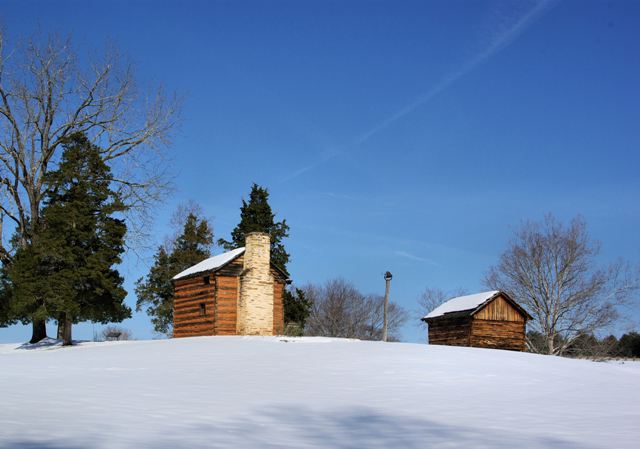
Winter (December - March): Winter brings a quiet and somber mood to the monument. The lack of foliage allows for better visibility of the farm's topography. While the grounds remain open, the visitor center may have reduced hours or days (currently Wednesday through Sunday). Occasional snow can transform the cabins into a picturesque winter scene.
Operating Hours: The park grounds and restrooms are generally open daily from 9:00 AM to 5:00 PM. The Visitor Center and museum are typically open Wednesday through Sunday from 10:00 AM to 4:00 PM. The site is closed on Thanksgiving, Christmas, and New Year's Day.
Activities and Adventures
The monument offers a blend of historical exploration, nature study, and interactive education.
Exploring the Historic Area: Most visitors begin with a self-guided walk through the "plantation core." This includes the reconstructed kitchen cabin (the birthplace site), the smokehouse, the blacksmith shop, and the tobacco barn. Interpretive panels provide quotes from Washington’s writings that bring the physical space to life.
Living History and Demonstrations: Check the park’s daily schedule for ranger-led programs and demonstrations. Depending on the season, you might see a gardener working in the heirloom vegetable patch, a ranger discussing the intricacies of 19th-century blacksmithing, or a demonstration of traditional fiber arts like spinning or weaving.
Hiking the Plantation Trails: The park features two main trails. The Plantation Trail (0.25 miles) is an easy loop around the historic buildings. The Jack-O-Lantern Branch Trail (1.5 miles) is a moderate hike that takes you through the woods and across the creek, offering a peaceful look at the broader plantation landscape.
Museum and Park Film: The visitor center museum features a comprehensive look at Washington’s life after he left the plantation. It explores his education at Hampton Institute, his work in Malden, West Virginia, and his legendary success at Tuskegee. The 15-minute introductory film provides essential context for his complex legacy in the Civil Rights movement.
Wildlife and Nature Study: The park’s diverse mix of forest, pasture, and wetland makes it a great spot for birdwatching. Keep an eye out for bluebirds, cardinals, and various hawks. The farm animals, including the horses and sheep, are always a favorite for families with children.
Junior Ranger Program: Children can participate in an educational program that encourages them to think about "overcoming obstacles." Completing the activity book earns them a Junior Ranger badge and a certificate.
History & Significance
The story of the Booker T. Washington National Monument is a narrative of personal transformation and national influence.
Life on the Burroughs Plantation: James Burroughs owned a modest plantation compared to the massive estates of the Deep South. Washington lived here from his birth in 1856 until 1865. His job as a young boy included carrying water to the workers in the fields and taking corn to the mill. These years were marked by the constant threat of family separation and the physical hardships of enslavement, yet Washington also recalled the strength of his mother, Jane, who worked as the plantation’s cook.
The End of Slavery: In May 1865, at the end of the Civil War, the enslaved people on the Burroughs farm were gathered in front of the main house to hear a Union officer read the Emancipation Proclamation. Washington later described this moment as "the day of freedom," marking the start of his epic quest for education.
Tuskegee and National Leadership: After leaving Virginia, Washington eventually founded the Tuskegee Normal and Industrial School in Alabama in 1881. He became the leading voice for African Americans at the turn of the century, advocating for economic progress and vocational training as the primary path to equality. His 1895 "Atlanta Exposition Address" made him a national figure and an advisor to Presidents Theodore Roosevelt and William Howard Taft.
Preservation of the Birthplace: The site was authorized as a National Monument in 1956, the centennial of Washington’s birth. The goal was to preserve the site that produced one of the world's greatest examples of the power of education and the American dream.
Lodging and Camping
While there is no camping or lodging within the National Monument, the surrounding area offers several options.
In-Park Camping: Not available.
Nearby Accommodations: The city of Roanoke (22 miles northwest) offers a full range of hotels, motels, and luxury inns. The Smith Mountain Lake area (10 miles south) features numerous vacation rentals, resorts, and bed and breakfasts.
State Park Alternatives: Smith Mountain Lake State Park is located about 15 miles to the south and offers developed campgrounds, swimming, and boating.
Dining: There are no food services within the monument. The visitor center has a small area with picnic tables. The nearby communities of Hardy and Moneta offer a variety of local restaurants and cafes.
Essential Information
Park Fees and Passes
- Entrance Fee: There is no fee to enter Booker T. Washington National Monument or its visitor center. It is a free public facility.
- Passes: While the park is free, the visitor center bookstore sells "America the Beautiful" passes for use at fee-charging National Parks across the country.
Safety Considerations
- Heat and Hydration: Virginia summers can be intensely hot. Always carry water when walking the trails or exploring the historic area.
- Historic Preservation: Help protect the site by not climbing on the log structures or touching the artifacts in the cabins.
- Farm Hazards: The livestock on the farm are domestic but can be unpredictable. Do not feed or pet the animals without a ranger’s permission.
- Insects and Ticks: Ticks and mosquitoes are common in the wooded areas and tall grasses. Stay on the designated trails and use insect repellent.
- Respectful Conduct: Remember that this site was a place of enslavement and is a site of deep historical trauma as well as inspiration. Please maintain a respectful demeanor.
Services and Facilities
The Visitor Center and museum are fully accessible and include restrooms and water fountains. The Plantation Trail around the historic buildings is paved and suitable for wheelchairs and strollers. The Jack-O-Lantern Branch Trail is unpaved and may have uneven terrain, making it less suitable for those with limited mobility.
Contact
- Phone: 540-682-0173
- Email: [email protected]
- Official site: https://www.nps.gov/bowa/index.htm
Booker T. Washington National Monument is more than a birthplace; it is a place that challenges us to consider the meaning of freedom and the importance of perseverance. By standing in the same kitchen cabin where Washington once stood, visitors can better understand the immense obstacles he overcame and the enduring legacy of his work. It is a vital destination for anyone seeking to understand the African American experience and the roots of American leadership.
Park Overview
Detailed overview of the park's history, geography, and main attractions will go here. This section provides essential background information for visitors.
Top Hikes
- Iconic Summit TrailDifficulty: Strenuous • Distance: 8 miles round trip
Loading reviews…
- Waterfall LoopDifficulty: Moderate • Distance: 3 miles loop
Loading reviews…
- Lakeside WalkDifficulty: Easy • Distance: 1.5 miles out & back
Loading reviews…
Recommended Hiking Gear
Gear up for your adventure with our trusted partners. These items help support the site at no extra cost to you!

Places to Stay
- Historic Park LodgeBook early!Type: Lodge
Loading reviews…
- Riverside CampgroundReservations required.Type: Campground
Loading reviews…
- Gateway Town Hotel15 miles from entrance.Type: Nearby Hotel
Loading reviews…