Castle Clinton National Monument
Fast Facts
Castle Clinton National Monument
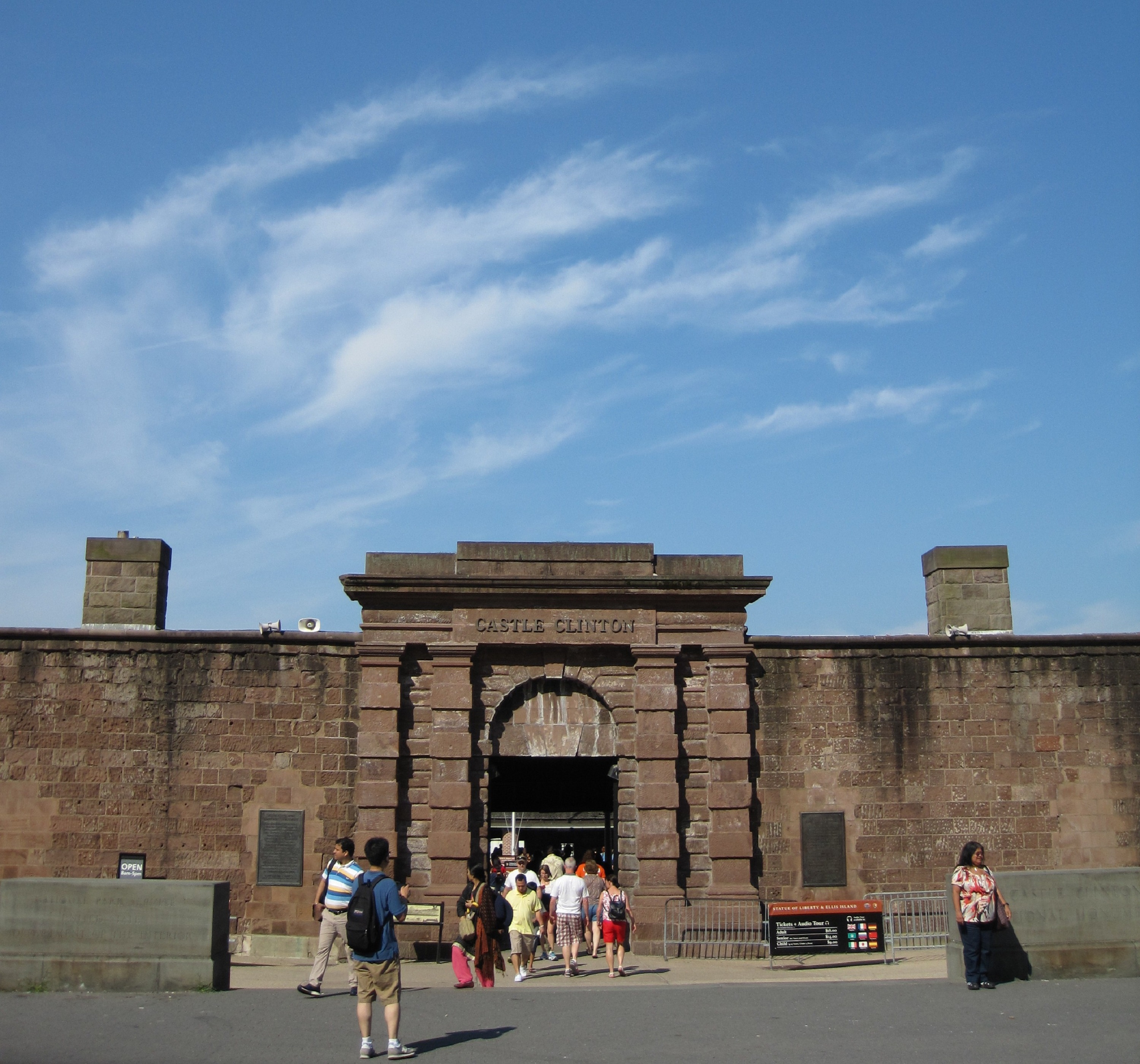
Standing at the very edge of the continent at the southern tip of Manhattan, Castle Clinton National Monument is a silent witness to the spectacular growth and transformation of New York City. This massive circular sandstone fort, built in the decade leading up to the War of 1812, has undergone more transitions than perhaps any other structure in the National Park System. It is a "chameleon of history" that has served as a defensive fort, a world-class opera house, the nation’s first official immigration station, and a beloved public aquarium. Today, it stands as the symbolic starting point where millions of visitors begin their journey to the Statue of Liberty and Ellis Island.
The monument represents a rare physical link to the earliest days of the American republic. Originally known as West Battery, it was part of a chain of coastal fortifications designed to protect New York Harbor from British naval attack. Throughout its 200-year history, the building has reflected the changing needs and aspirations of the city and the nation. It was at Castle Garden (as it was later known) that more than 8 million immigrants first stepped onto American soil between 1855 and 1890, decades before Ellis Island was established. The fort's walls have resonated with the voices of opera star Jenny Lind and the cheers of millions of theatergoers, making it a central hub of 19th-century American culture.
Visiting Castle Clinton is an immersion in the layered history of Lower Manhattan. The site offers more than just a ferry ticket office; it is a meticulously preserved archaeological and architectural treasure. Whether you are exploring the museum exhibits that detail its five distinct "lives," admiring the master stonework of the 1811 fortifications, or simply enjoying the sea breeze from its courtyard in Battery Park, the monument provides a profound connection to the maritime and cultural foundations of New York. It is a place where the past and the present of the city converge at the gateway to the harbor.
Key Highlights
- The Historic Fort Walls: Marvel at the 28-foot-high red sandstone walls, featuring original gun embrasures that once held massive 32-pounder cannons.
- Birthplace of Immigration: Learn about the "pre-Ellis Island" era, where millions of immigrants were processed at the Castle Garden Emigrant Landing Depot.
- Museum Exhibits: Explore interactive displays that chronicle the fort’s transformations from a military outpost to a theater and an aquarium.
- Statue of Liberty Ferry Gateway: Begin your voyage to the Statue of Liberty and Ellis Island at the monument, which serves as the primary ticket and security hub.
- Battery Park Setting: Enjoy the surrounding 25 acres of historic parkland, featuring harbor overlooks, memorials, and vibrant perennial gardens.
- Cultural Legacy: Discover the story of the "Swedish Nightingale" Jenny Lind, whose 1850 American debut at Castle Garden became a national sensation.
- Junior Ranger Program: An engaging way for children to learn about coastal defense, immigration history, and the evolution of New York City.
Getting There
Castle Clinton is located in historic Battery Park in Lower Manhattan, at the junction of State and Whitehall Streets.
By Public Transit (The Recommended Way):
- Subway (MTA):
- 1 Line: Stop at South Ferry.
- 4 or 5 Lines: Stop at Bowling Green.
- R or W Lines: Stop at Whitehall Street/South Ferry.
- J or Z Lines: Stop at Broad Street.
- Bus: Numerous MTA bus routes serve the Battery, including the M15, M20, and M55.
- Ferry: The Staten Island Ferry terminal is located just a few steps east of the park. Numerous NYC Ferry routes and the New York Waterway also stop nearby.
By Car:
- Driving to Lower Manhattan is not recommended due to extremely heavy traffic and the virtual absence of on-street parking. If you must drive, several expensive commercial parking garages are located north of Battery Park.
By Foot or Bicycle: The park is the southern terminus of the Manhattan Waterfront Greenway. Bike racks are available within Battery Park, though biking is restricted within the immediate monument area.
Main Entrance: Castle Clinton is accessible only by foot within Battery Park. Follow the wide paved paths toward the water’s edge. The physical address is Battery Park, New York, NY 10004.
For more detailed maps and transit connections, visit the official park directions page.
Best Time to Visit
New York City experiences a full range of seasonal weather, and the experience at Castle Clinton is dictated by the harbor’s maritime climate.
Spring (April - June): This is one of the most pleasant times to visit. The gardens of Battery Park are in bloom, and the harbor breezes are refreshing. Temperatures range from the 50s to the 70s. This is a busy season for school groups, so early morning visits are best.
Summer (July - August): Summer is the peak tourist season. The weather is hot and often humid, with temperatures frequently reaching the 90s. Castle Clinton’s courtyard is open-air and can be very warm, though the thick stone walls provide some natural cooling in the exhibit areas. Expect long lines for ferry tickets and security during this time.
Fall (September - October): Many regular visitors consider autumn to be the ideal season. The intense heat fades into crisp, clear days with temperatures in the 60s. The fall foliage in Battery Park provides a beautiful backdrop for the red sandstone of the fort.
Winter (November - March): Winter turns the harbor into a stark and often windy environment. While the monument remains open, it can be very cold, and the winds off the water can be biting. However, winter offers the smallest crowds and a more solitary experience in the museum and around the fort walls.
Operating Hours: Castle Clinton is typically open daily from 7:45 AM to 5:00 PM. The monument is closed on Thanksgiving and Christmas Day. Always check the park’s website for the most current ferry ticket and security hours.
Activities and Adventures
Castle Clinton offers a blend of historical education and serve as a vital transit hub for harbor exploration.
Museum and Exhibit Tour: Most visitors begin by walking the interior perimeter of the fort. A series of high-quality exhibits detail the "Five Lives" of Castle Clinton. You can see models of the building in its various forms and learn about the individuals who shaped its history.
Guided Ranger Talks: National Park Service rangers and volunteers frequently offer guided talks about the fort’s military history and its role as an immigration station. These talks provide deep context that is not always apparent from the physical structures alone. Check the daily schedule near the information desk.
Ferry Ticket and Security Hub: If you are visiting the Statue of Liberty or Ellis Island, your journey begins here. You can purchase or pick up reserved tickets at the windows inside the fort. The security screening facility for the ferries is located immediately adjacent to the monument.
Exploring Battery Park: Take time to explore the surroundings. Battery Park features dozens of other significant monuments, including the East Coast Memorial, the Netherlands Monument, and the SeaGlass Carousel. The "Battery Woodland" offers a peaceful escape from the city’s noise.
Photography: The architecture of the fort, the harbor views, and the nearby "Skyscrapers of Wall Street" offer incredible subjects for photography. The "golden hour" in the late afternoon provides the best light for the red sandstone walls and the silhouettes of the ferries.
Junior Ranger Program: Children can participate in an educational program that focuses on the diverse history of the fort. Completing the activities earns them a Junior Ranger badge.
History & The "Five Lives"
The significance of Castle Clinton lies in its remarkable ability to adapt to New York’s changing landscape.
1. The Defensive Fort (1811-1821): Built on an artificial island connected by a bridge to Manhattan, West Battery was part of a system of forts (including Castle Williams and Fort Jay) designed to keep the British out of the city. Although it never saw combat during the War of 1812, its presence served as a powerful deterrent.
2. Castle Garden Theater (1824-1854): After the military abandoned the fort, it was leased to the city and became an entertainment center. The courtyard was roofed over, creating a 6,000-seat theater. It hosted world-class performers and served as the site for major civic celebrations, including the reception for General Lafayette in 1824.
3. Emigrant Landing Depot (1855-1890): As immigration boomed, the State of New York established the nation’s first official immigration station at Castle Garden. Over 8 million people—including Harry Houdini, Nikola Tesla, and Joseph Pulitzer—passed through these walls before the federal government took over and moved operations to the larger Ellis Island in 1892.
4. New York City Aquarium (1896-1941): The building was transformed once again into the city’s first public aquarium. It was one of the most popular attractions in New York, drawing millions of visitors to see the diverse marine life of the Atlantic. It closed in 1941 when Robert Moses planned to demolish the structure to make way for a bridge and tunnel project.
5. National Monument (1946-Present): Public outcry saved the fort from demolition. It was designated a National Monument in 1946 and meticulously restored by the NPS in the 1970s. Today, it serves as a gateway to the history of the harbor and a permanent anchor for the story of New York.
Lodging and Camping
As an urban monument in Lower Manhattan, there is no camping or lodging on-site.
In-Park Camping: Not available.
Nearby Accommodations: The Financial District (FiDi) and the nearby Battery Park City neighborhood offer a wide range of hotels, from luxury business properties to more modest business-class options. Staying here puts you within walking distance of the monument and the harbor ferries.
Dining: Battery Park and the surrounding streets feature dozens of restaurants ranging from casual waterfront cafes to historic pubs and high-end dining in the Financial District. The Staten Island Ferry terminal also features a food court.
Essential Information
Park Fees and Passes
- Entrance Fee: There is no fee to enter Castle Clinton National Monument or its museum. It is a free public facility.
- Ferry Fees: A fee is required for the Statue City Cruises ferries to the Statue of Liberty and Ellis Island. It is highly recommended to reserve these tickets months in advance.
- Passes: The park accepts and sells "America the Beautiful" passes at the visitor center.
Safety Considerations
- Urban Environment: As with any city visit, be aware of your surroundings and keep your personal belongings secure. Battery Park is a high-traffic area.
- Crowds: The monument can become extremely crowded, especially during the summer and holidays. Be patient and allow extra time for ferry security.
- Weather: Lower Manhattan is very windy and can be significantly cooler than the rest of the city. Be prepared for harbor breezes and carry water in the summer.
- Walking Safety: The paths within Battery Park are paved and well-maintained. Use caution when crossing the busy streets surrounding the park.
Services and Facilities
The Visitor Center and Museum are fully accessible and include public restrooms and water fountains. Most of the monument is level and accessible via paved sidewalks. The ferry security and boarding facilities are also designed to be accessible to those with mobility impairments.
Contact
- Phone: 212-329-9979
- Email: [email protected]
- Official site: https://www.nps.gov/cacl/index.htm
Castle Clinton National Monument is a place that tells the story of America through the prism of a single building. By walking through its walls and reflecting on its many transformations, visitors can gain a deeper appreciation for the resilience and energy that built New York City. It is a vital destination for anyone seeking to understand the deep maritime and human roots of the nation’s greatest metropolis.
Park Overview
Detailed overview of the park's history, geography, and main attractions will go here. This section provides essential background information for visitors.
Top Hikes
- Iconic Summit TrailDifficulty: Strenuous • Distance: 8 miles round trip
Loading reviews…
- Waterfall LoopDifficulty: Moderate • Distance: 3 miles loop
Loading reviews…
- Lakeside WalkDifficulty: Easy • Distance: 1.5 miles out & back
Loading reviews…
Recommended Hiking Gear
Gear up for your adventure with our trusted partners. These items help support the site at no extra cost to you!

Places to Stay
- Historic Park LodgeBook early!Type: Lodge
Loading reviews…
- Riverside CampgroundReservations required.Type: Campground
Loading reviews…
- Gateway Town Hotel15 miles from entrance.Type: Nearby Hotel
Loading reviews…