Capitol Hill Parks
Fast Facts
Capitol Hill Parks
In the dense, historic grid of Washington, D.C., Capitol Hill Parks serve as a vital "green lung" for the nation's capital. This unique administrative unit of the National Park Service manages over 60 individual park parcels scattered across the Capitol Hill neighborhood. These range from large, multi-block community centers like Lincoln Park to tiny "pocket parks" and traffic triangles that provide essential green space amidst the row houses and federal buildings. Together, these parks form a mosaic of urban nature, commemorative art, and neighborhood gathering places that reflect the multi-layered history of the District of Columbia.
The parks are more than just lawns and trees; they are outdoor museums and theaters of civic life. The centerpiece of the network is Lincoln Park, the largest of the group, which features significant monuments to President Abraham Lincoln and civil rights leader Mary McLeod Bethune. Other major hubs include Stanton Park, named for Lincoln’s Secretary of War, and Folger Park, known for its elegant landscape design. These spaces are deeply integrated into the daily lives of the local community, serving as playgrounds for children, corridors for commuters, and serene escapes for residents and visitors alike.
Visiting the Capitol Hill Parks is an invitation to experience Washington, D.C. as a "city of parks." Whether you are attending a community concert in Lincoln Park, admiring the 19th-century statuary in Stanton Park, or simply finding a quiet bench in a hidden triangle along Maryland Avenue, the network provides a profound connection to the urban planning ideals of Pierre L’Enfant and the ongoing evolution of the American city. It is a place where the grandeur of national history meets the intimacy of neighborhood life under the canopy of some of the city's oldest trees.
Key Highlights
- Lincoln Park: Explore the largest of the Capitol Hill Parks, featuring the powerful Emancipation Group memorial and the first statue on public land in D.C. to honor an African American woman, Mary McLeod Bethune.
- Stanton Park: Visit this multi-block park featuring a prominent equestrian statue of Revolutionary War General Nathanael Greene and beautifully landscaped garden beds.
- Mary McLeod Bethune Memorial: Pay tribute to the founder of the National Council of Negro Women at this moving sculpture, which depicts her passing her legacy to two young children.
- Emancipation Group Memorial: Reflect on the complex history of the 1876 monument to Abraham Lincoln, funded entirely by donations from formerly enslaved people.
- Folger Park: Enjoy the peaceful atmosphere and historic canopy of this park, which is currently undergoing a multi-year rehabilitation to restore its Victorian-era charm.
- Urban Green Corridors: Cycle or walk through the numerous triangles and squares along Pennsylvania and Maryland Avenues, showcasing the District’s unique L’Enfant-designed diagonal streets.
- Community Playgrounds: Utilize the modern recreational facilities in parks like Marion and Lincoln, which serve as essential hubs for local families.
Getting There
The Capitol Hill Parks are spread throughout the neighborhood east of the U.S. Capitol, making them easily accessible via various transportation methods.
By Metro (WMATA):
- Eastern Market Station (Orange, Blue, and Silver Lines): Centrally located and within walking distance of many of the smaller triangles and Seward Square.
- Capitol South Station (Orange, Blue, and Silver Lines): Convenient for reaching the parks closer to the U.S. Capitol building.
- Potomac Avenue Station: Ideal for accessing the parks at the eastern end of the neighborhood, such as Twining Square.
- Union Station (Red Line): Approximately a 10-15 minute walk from Stanton Park.
By Bus:
- Numerous Metrobus lines serve the Capitol Hill area, including the 30, 90, and 92 series. The DC Circulator (National Mall and Union Station-Navy Yard routes) also has multiple stops near the major parks.
By Car:
- Driving in the Capitol Hill neighborhood can be difficult due to heavy traffic and very limited public parking. Most street parking is reserved for residents (Zone 6) or has strict 2-hour time limits. It is highly recommended to use public transit or walk.
- Main Office: The parks are managed by National Capital Parks-East, located at 1900 Anacostia Drive SE. However, there is no central visitor center within the Capitol Hill neighborhood itself.
Walking and Biking: The neighborhood is exceptionally walkable and bike-friendly. Capital Bikeshare docks are located near almost every major park, including Lincoln, Stanton, and Marion Parks.
For more detailed maps of the individual park parcels, visit the official park directions page.
Best Time to Visit
Washington D.C. experiences four distinct seasons, and the Capitol Hill Parks offer something unique in each.
Spring (March - May): This is arguably the best time to visit. The park’s many flowering trees—including cherry, dogwood, and saucer magnolia—bloom in succession, creating a spectacular display. The temperatures are mild (50s to 70s), making it ideal for walking the diagonal avenues between the parks.
Summer (June - August): Summers are hot and very humid. However, the mature tree canopy in parks like Lincoln and Folger provides significant shade and a cooler microclimate. These parks are popular spots for evening picnics and neighborhood gatherings. Always stay hydrated and be prepared for high humidity.
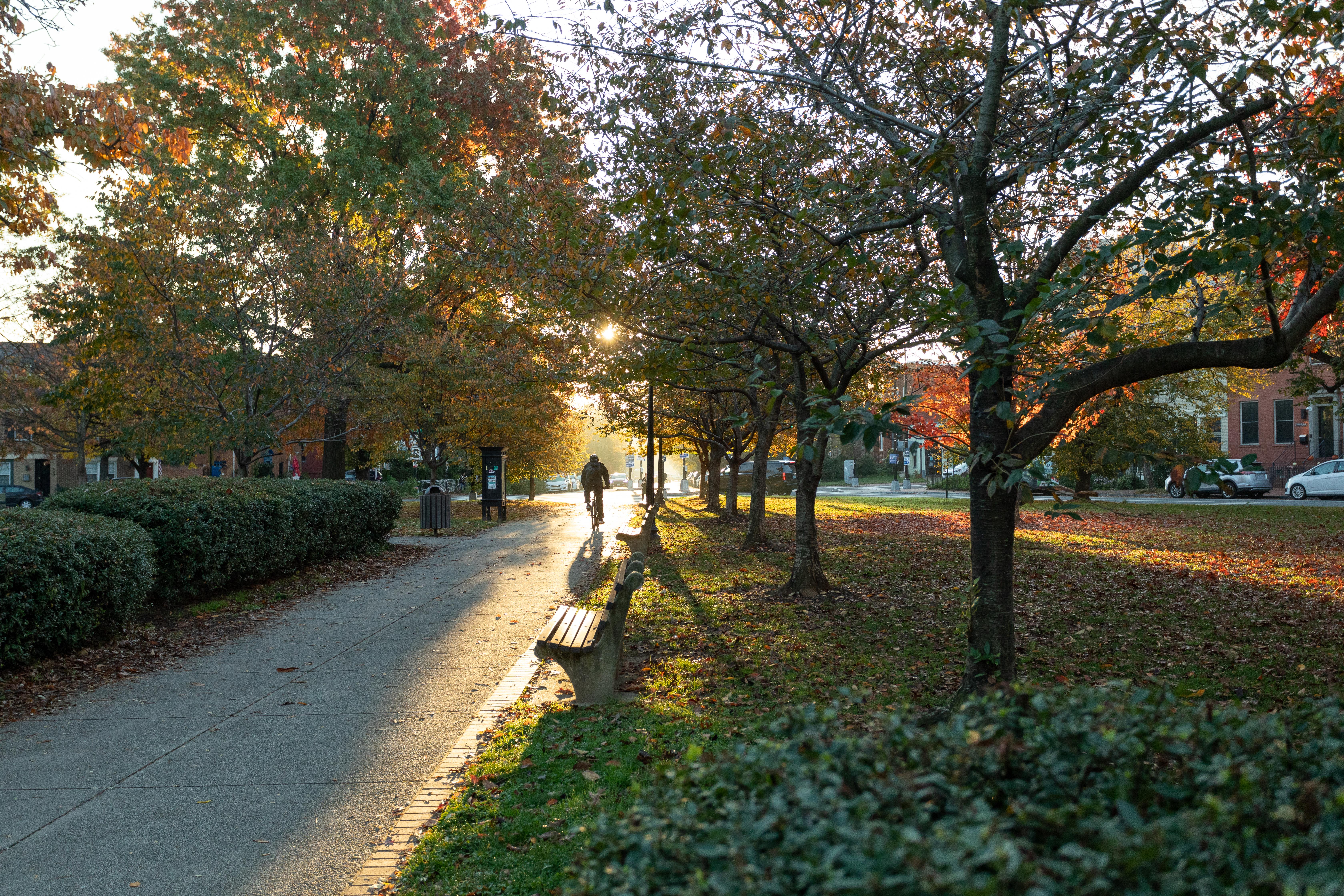
Fall (September - November): Autumn brings a welcome relief from the summer heat. The hardwood trees, particularly the oaks and ginkgoes, provide a beautiful display of fall foliage. The air is crisp and clear, making for excellent conditions for outdoor recreation and photography.
Winter (December - February): Winters are cool to cold, with occasional snow. The parks take on a quiet, serene quality, and the lack of foliage reveals the architectural details of the surrounding row houses. While some facilities like water fountains are turned off, the parks remain popular for dog walking and quiet reflection.
Operating Hours: The Capitol Hill Parks are generally open daily from 6:00 AM to 10:00 PM. No fee is required to enter any of the parks.
Activities and Adventures
The Capitol Hill Parks are designed for neighborhood use, urban recreation, and quiet reflection.
Monuments and Memorials Tour: Take a self-guided walk to see the diverse statuary. Start at Lincoln Park to see the Bethune and Lincoln memorials. Then walk north to Stanton Park for the General Greene statue. Continue exploring the smaller triangles to find local historic markers and hidden artistic features.
Biking and Jogging: The parks are connected by the neighborhood's wide, tree-lined sidewalks and bike lanes. The route from Lincoln Park along Maryland Avenue to the U.S. Capitol is a favorite for local joggers and cyclists, offering a scenic and relatively flat path.
Community Gathering and Picnicking: On any pleasant weekend, you will see families and groups utilizing the larger lawns for picnics, frisbee, and reading. Lincoln Park and Marion Park have designated areas that are popular for community social life.
Recreation and Playgrounds: Marion Park and Lincoln Park both feature large, modern playgrounds that are very popular with children. These sites serve as essential social hubs for the "Hill" community.
Photography: The juxtaposition of the historic memorials against the backdrop of the U.S. Capitol dome or the colorful Victorian row houses provides endless opportunities for photography. The "golden hour" in the late afternoon provides the best light for the bronze statues.
Junior Ranger Program: While there is no on-site visitor center, children can participate in the National Capital Parks-East Junior Ranger program. Materials are often available at special events or can be downloaded online, encouraging kids to learn about urban nature and civic history.
Nature Study in the City: The parks are home to a surprising variety of urban wildlife, including migratory songbirds, hawks, and numerous squirrel species. The diverse tree collection, some of which dates back to the early 20th century, offers a great opportunity for urban forestry enthusiasts to study different species.
History & Urban Design
The story of the Capitol Hill Parks is a narrative of urban planning and social evolution.
The L’Enfant Plan: When Pierre L’Enfant designed Washington D.C. in 1791, he envisioned a city of grand avenues and expansive public spaces. He purposefully created the diagonal avenues (like Pennsylvania, Maryland, and Massachusetts Avenues) to intersect with the grid streets, creating the triangles and squares that make up the Capitol Hill Parks today. These spaces were intended to be "public reservations" for the use and enjoyment of the citizens.
Lincoln Park History: Originally known as "Reservation No. 1," Lincoln Park was used as a camp for Union soldiers during the Civil War. In 1867, it was officially named Lincoln Park. For decades, it was a focal point for the city’s African American community, serving as a site for large-scale emancipation celebrations and civil rights rallies.
Commemorative Art: The statues within the parks reflect the changing priorities of the nation. The 1876 Emancipation Memorial was a product of the Reconstruction era, while the 1974 Mary McLeod Bethune Memorial was the result of a decades-long effort by the National Council of Negro Women to honor a Black woman on public land in the capital. These memorials provide a powerful visual history of the struggle for equality.
A Living Landscape: Over the years, the parks have evolved from simple open fields to formal Victorian gardens and finally to the multi-use recreational spaces of today. The National Park Service continues to balance the historic preservation of the landscape designs with the modern needs of a growing urban population.
Lodging and Camping
As an urban park network, there is no lodging or camping permitted on-site.
In-Park Camping: Not available.
Nearby Accommodations: The Capitol Hill neighborhood has several boutique hotels and bed and breakfasts. The nearby Union Station and NoMa areas offer a wider range of larger hotels. Staying on the "Hill" allows for easy walking access to many of the park parcels.
Dining: The area is a culinary destination. Eastern Market (located near Seward Square) features a historic food hall and numerous local vendors. Pennsylvania Avenue and 8th Street SE (Barracks Row) offer dozens of restaurants ranging from casual cafes to high-end dining.
Essential Information
Park Fees and Passes
- Entrance Fee: There is no fee to enter any of the Capitol Hill Parks. They are free public spaces.
- Passes: While the parks are free, the NPS administrative offices sell "America the Beautiful" passes for use at fee-charging National Parks.
Safety Considerations
- Urban Environment: As with any city park, be aware of your surroundings and keep your personal belongings secure. The parks are well-patrolled by the U.S. Park Police, but it is always best to stay in well-lit areas after dark.
- Traffic: When moving between the various park parcels, be extremely careful of vehicle traffic. Washington’s diagonal intersections can be confusing for both drivers and pedestrians. Always use designated crosswalks.
- Heat and Humidity: During the summer, D.C. is extremely hot. Stay hydrated and utilize the shade of the large trees.
- Respectful Conduct: The memorials are sites of historical and cultural significance. Please maintain a respectful demeanor. Do not climb on statues or monuments.
- Pet Etiquette: Pets must be kept on a leash at all times. Owners are required to pick up after their pets to keep the parks clean for everyone.
Services and Facilities
Public restrooms are available seasonally at Lincoln Park. Most other park parcels do not have on-site facilities, but the surrounding neighborhood is full of cafes and shops where services are available. Most of the parks are fully accessible to wheelchairs and strollers via paved pathways.
Contact
- Phone: 771-208-1453
- Email: [email protected]
- Official site: https://www.nps.gov/cahi/index.htm
Capitol Hill Parks are a testament to the idea that national parks are not just found in remote wilderness, but are an essential part of our urban lives. By providing spaces for play, reflection, and community, these parks ensure that the spirit of democracy remains vibrant in the heart of the capital. They are a essential destination for anyone seeking to understand the living history and neighborhood character of Washington, D.C.
Park Overview
Detailed overview of the park's history, geography, and main attractions will go here. This section provides essential background information for visitors.
Top Hikes
- Iconic Summit TrailDifficulty: Strenuous • Distance: 8 miles round trip
Loading reviews…
- Waterfall LoopDifficulty: Moderate • Distance: 3 miles loop
Loading reviews…
- Lakeside WalkDifficulty: Easy • Distance: 1.5 miles out & back
Loading reviews…
Recommended Hiking Gear
Gear up for your adventure with our trusted partners. These items help support the site at no extra cost to you!

Places to Stay
- Historic Park LodgeBook early!Type: Lodge
Loading reviews…
- Riverside CampgroundReservations required.Type: Campground
Loading reviews…
- Gateway Town Hotel15 miles from entrance.Type: Nearby Hotel
Loading reviews…