Carter G. Woodson Home National Historic Site
Fast Facts
Carter G. Woodson Home National Historic Site
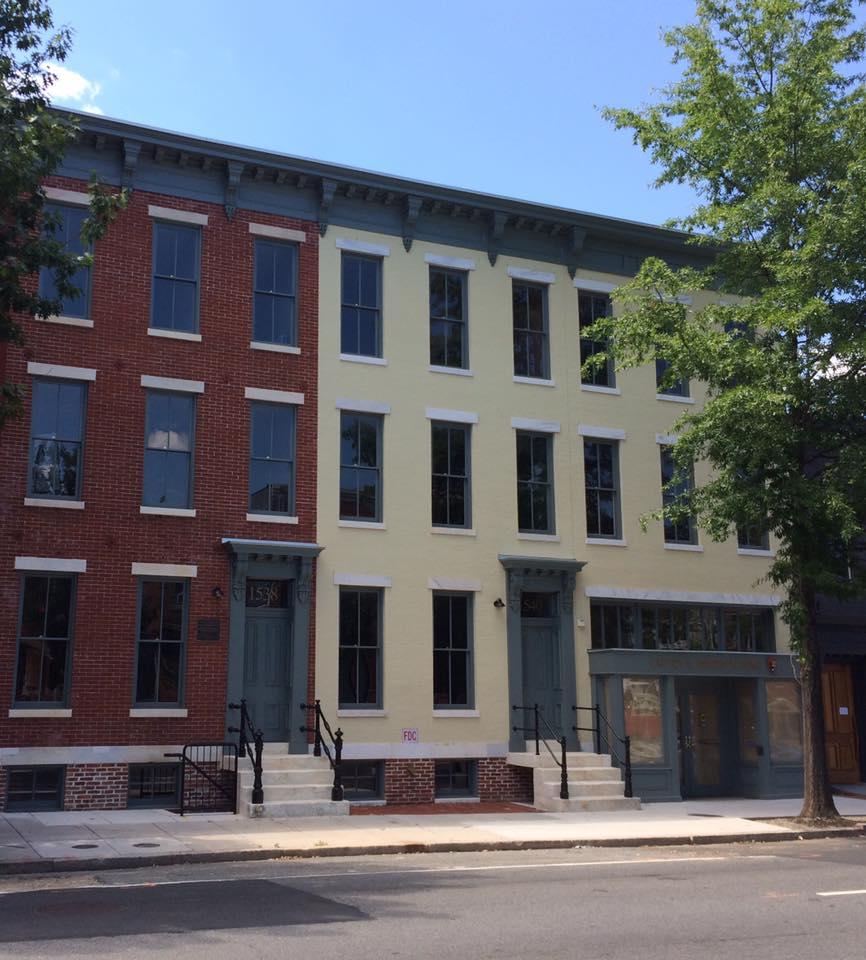
In the heart of Washington D.C.’s historic Shaw neighborhood, the Carter G. Woodson Home National Historic Site preserves the residence and office of the man known as the "Father of African American History." For more than 35 years, this Victorian-style row house at 1538 Ninth Street NW served as the home and tactical headquarters for Dr. Carter G. Woodson. From this building, Dr. Woodson spearheaded a revolution in American education, working tirelessly to ensure that the lives, struggles, and achievements of people of African descent were accurately recorded and recognized as an integral part of the American story.
Dr. Woodson purchased the home in 1922 and immediately established it as the office for the Association for the Study of Negro Life and History (now the Association for the Study of African American Life and History, or ASALH) and the Associated Publishers. It was here, in 1926, that he founded "Negro History Week," an event that has since evolved into the nationally celebrated Black History Month. The site was not just a residence; it was a vibrant center of intellectual activity, where Woodson authored dozens of books, edited scholarly journals, and mentored a new generation of historians. Designated as a National Historic Site in 2003, the home stands as a powerful symbol of the power of the written word and the essential role of history in the quest for social justice.
Visiting the Carter G. Woodson Home is a journey into the life of a visionary scholar. The meticulously restored row house, along with two adjacent properties, allows visitors to see the environment where Dr. Woodson labored among stacks of books and research files. Whether you are interested in the history of the Civil Rights movement, the evolution of American scholarship, or the architectural heritage of the nation's capital, the monument provides a profound and inspiring connection to a man whose work continues to shape our understanding of the American experience.
Key Highlights
- The ASALH Headquarters: Stand in the very building where the most significant organization for the promotion of African American history was founded and operated for decades.
- Birthplace of Black History Month: Learn about the origins of Negro History Week and how Dr. Woodson’s vision transformed American cultural celebrations.
- Dr. Woodson’s Office: See the restored office space where Woodson worked with his editorial staff and a world-class collection of primary source documents.
- Victorian Architecture: Admire the beautifully restored red brick Victorian row house, a quintessential example of the historic Shaw neighborhood’s 19th-century charm.
- The Associated Publishers Exhibit: Explore displays detailing the history of the publishing house Woodson founded to produce textbooks and literature on Black history when mainstream publishers refused to do so.
- Historic Shaw Neighborhood: Use the site as a starting point to explore one of Washington D.C.’s most significant centers of African American culture, music, and leadership.
- Museum Film and Exhibits: View a comprehensive introductory film and interactive exhibits that explain Woodson’s scholarly rigor and his "Miseducation of the Negro" philosophy.
Getting There
The Carter G. Woodson Home is located in the vibrant Shaw neighborhood of Northwest Washington, D.C.
By Metro (WMATA):
- Shaw-Howard University Station (Green and Yellow Lines): This is the closest station, located approximately 0.4 miles (an 8-minute walk) from the home. Walk south on 7th or 9th Street to reach the site.
- Mt Vernon Sq/7th St-Convention Center Station: Also within a reasonable walking distance (about 0.6 miles) to the south.
By Bus:
- Several Metrobus routes serve the 7th and 9th Street corridors, including the 70 and 79 lines. The DC Circulator (Convention Center-Southwest Waterfront route) also has stops nearby.
By Car:
- Driving in the Shaw neighborhood can be challenging due to limited parking. Most street parking is metered or reserved for residents. There are several commercial parking garages located near the Walter E. Washington Convention Center, which is a 10-minute walk away.
- Main Entrance: The public entrance is located at 1538 Ninth Street NW, Washington, DC 20001.
Nearest Airports:
- Ronald Reagan Washington National Airport (DCA): The closest airport, about 5 miles south, with direct Metro connections (Yellow Line) to the Shaw neighborhood.
- Dulles International (IAD) and Baltimore/Washington International (BWI): Both are approximately 45-60 minutes away depending on traffic.
Note on Navigation: The home is situated in a dense urban row. Look for the NPS brown sign and the historical marker in front of the brick townhouse.
For more detailed maps and current tour information, visit the official park directions page.
Best Time to Visit
Washington D.C. experiences four distinct seasons, and as an indoor historic site, the Woodson Home is a year-round destination.
Spring (March - May): This is a popular time to visit, especially during Women's History Month (March). The Shaw neighborhood is lively, and the weather is typically mild (50s to 70s). Note that school groups frequently visit during this season, so early morning or late afternoon tours are recommended.
Summer (June - August): Summers in D.C. are hot and very humid. The restored historic site is climate-controlled, providing a cool and comfortable environment for learning. Be prepared for occasional afternoon thunderstorms.
Fall (September - November): Autumn offers pleasant temperatures and lower humidity. The walk through the historic streets of Shaw is particularly enjoyable during the fall foliage season. Crowds are often more manageable than in the spring or summer.
Winter (December - February): February is the busiest and most significant month to visit, as it is Black History Month. The National Park Service and ASALH often host special events and guest speaker series during this time. Reservations for tours are highly recommended well in advance for February.
Operating Hours: The site is typically open for guided tours on specific days (currently Thursdays, Fridays, and Saturdays from 9:00 AM to 5:00 PM). Crucial Note: Due to ongoing restoration and staff requirements, tours are often scheduled at specific times (e.g., 9 am, 10:30 am, 1 pm, 3 pm). It is highly recommended to check the park website or call 771-208-1499 to confirm the daily schedule and reserve a tour.
Activities and Adventures
The Carter G. Woodson Home is primarily a site for historical education, research, and quiet reflection.
Guided Tours: This is the only way to see the interior of the home. Tours are led by National Park Service rangers or highly trained volunteers. They provide deep context on Dr. Woodson's life—from his time as a coal miner in West Virginia to his PhD from Harvard—and explain the significance of the artifacts on display. The tour takes you through the main floor parlors and the upstairs office levels.
Self-Guided Exhibits: The adjacent properties (1540 and 1542 Ninth Street) have been integrated into the site to serve as a visitor center and museum. Here, you can explore interactive displays on the history of ASALH, the impact of Woodson’s "The Journal of Negro History," and the cultural history of the Shaw neighborhood.
Junior Ranger Program: Children can participate in an educational program that teaches them about the importance of telling "all the stories" of American history. Completing the activity booklet earns them a Junior Ranger badge.
ASALH Bookstore: The visitor center features a bookstore operated in partnership with ASALH, offering a wide selection of Dr. Woodson’s original works, contemporary Black history titles, and educational materials.
Photography: Photography is generally permitted for personal use, though the use of flash or tripods may be restricted to protect the historic finishes and artifacts. The facade of the home and the restored interior hallways are excellent subjects for capturing the atmosphere of Woodson’s era.
Exploring Shaw: After your tour, take time to walk through the surrounding neighborhood. Nearby sites include the Howard Theatre, the Mary McLeod Bethune Council House National Historic Site, and the African American Civil War Memorial, all of which are part of the same rich cultural tapestry.
History & Significance
The story of the Carter G. Woodson Home is the story of the intellectual foundation of the Civil Rights movement.
The Visionary Scholar: Carter G. Woodson (1875-1950) was the second African American to earn a PhD from Harvard (after W.E.B. Du Bois). He recognized that "if a race has no history, if it has no worthwhile tradition, it becomes a negligible factor in the thought of the world." He dedicated his life to correcting the bias in American history that either ignored or vilified the African American experience.
A Headquarters for History: When Woodson purchased this home in 1922, it became a 24/7 operation. He lived in a small apartment on the third floor, while the rest of the house was devoted to the work of ASALH and the Associated Publishers. He employed dozens of researchers, editors, and clerks, many of them women, making the home a major employer of Black professionals in the District.
The Miseducation of the Negro: In 1933, Woodson published his most famous work, The Mis-Education of the Negro, from this address. The book argued that African Americans were being culturally indoctrinated to accept inferiority through their education. This work remains a foundational text in African American studies and social philosophy.
A Living Legacy: After Woodson’s death in 1950, the house continued to serve as the ASALH headquarters for decades. Its designation as a National Historic Landmark and later a National Historic Site ensured that the physical space where "Black History Month" was born would be preserved. The ongoing partnership between the NPS and ASALH ensures that Woodson’s mission of research and education continues today.
Lodging and Camping
As an urban historic site, there is no lodging or camping on-site.
In-Park Camping: Not available.
Nearby Accommodations: The Shaw and Mt. Vernon Square neighborhoods have several hotels, ranging from boutique properties to large business-class hotels. The site is also a short distance from the major hotel clusters near the National Mall and Union Station.
Dining: The Shaw neighborhood is one of Washington D.C.’s premier dining destinations. You can find everything from historic soul food spots to award-winning contemporary restaurants and trendy coffee shops within a few blocks of the Woodson Home.
Essential Information
Park Fees and Passes
- Entrance Fee: There is no fee to visit the Carter G. Woodson Home or the Visitor Center.
- Tours: Guided tours are free of charge, though they are limited in size and should be reserved in advance.
- Passes: While the site is free, the bookstore sells various National Park passes for use at fee-charging parks.
Safety Considerations
- Urban Environment: As with any city visit, be aware of your surroundings and keep your personal belongings secure. The Shaw neighborhood is a busy area with significant foot and vehicle traffic.
- Stairs: The historic house has several levels connected by original, narrow staircases. While the Visitor Center and the main floor of the home are accessible via a ramp and elevator, full access to the upper levels of the historic home may be limited for those with mobility impairments.
- Security: Like many federal buildings in D.C., there may be a security screening process upon entry. Large bags or backpacks may need to be stored or carried in front.
- Heat and Humidity: During the summer, D.C. is extremely hot. Stay hydrated and use the water fountains available in the visitor center.
Services and Facilities
The Visitor Center is fully accessible and includes public restrooms, a bookstore, and a theater. The museum exhibits are designed to be accessible to all. The historic home has a wheelchair ramp at the rear entrance and an internal lift for the first floor.
Contact
- Phone: 771-208-1499
- Email: [email protected]
- Official site: https://www.nps.gov/cawo/index.htm
Carter G. Woodson Home National Historic Site is a place that challenges us to think about who writes history and why it matters. By standing in the rooms where Woodson worked, visitors can better understand the immense labor required to reclaim a stolen heritage and the enduring power of the truth. It is a vital destination for anyone seeking to understand the intellectual heart of the American story.
Park Overview
Detailed overview of the park's history, geography, and main attractions will go here. This section provides essential background information for visitors.
Top Hikes
- Iconic Summit TrailDifficulty: Strenuous • Distance: 8 miles round trip
Loading reviews…
- Waterfall LoopDifficulty: Moderate • Distance: 3 miles loop
Loading reviews…
- Lakeside WalkDifficulty: Easy • Distance: 1.5 miles out & back
Loading reviews…
Recommended Hiking Gear
Gear up for your adventure with our trusted partners. These items help support the site at no extra cost to you!

Places to Stay
- Historic Park LodgeBook early!Type: Lodge
Loading reviews…
- Riverside CampgroundReservations required.Type: Campground
Loading reviews…
- Gateway Town Hotel15 miles from entrance.Type: Nearby Hotel
Loading reviews…