Catoctin Mountain Park
Fast Facts
Catoctin Mountain Park
In the rugged Blue Ridge Mountains of north-central Maryland, Catoctin Mountain Park preserves a landscape that is both a natural sanctuary and a testament to the power of national renewal. This 5,800-acre park was born from the desperate days of the Great Depression, when President Franklin D. Roosevelt established the Catoctin Recreational Demonstration Area. Once a depleted land exhausted by logging, charcoal making, and unsuccessful farming, it was transformed into a thriving forest and a premier destination for outdoor recreation through the labor of the Civilian Conservation Corps (CCC) and the Works Progress Administration (WPA). Today, the park offers a peaceful escape from the nearby metropolitan areas of Washington D.C. and Baltimore, providing a dense canopy of hardwood forests, cold-water streams, and spectacular rocky vistas.
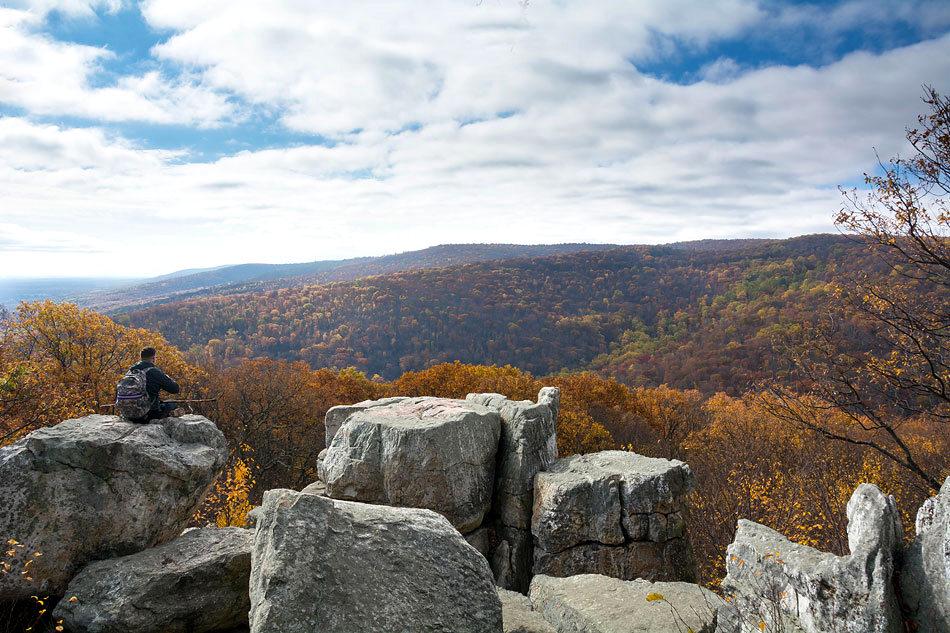
The park is a study in forest reclamation and historical continuity. It is perhaps most famous as the neighbor and former site of Camp David, the presidential retreat (which is located within the park’s administrative boundaries but is not open to the public). However, for the millions of visitors who come to Catoctin, the true draw is the extensive network of trails and the opportunity to experience the "quiet" side of the Appalachian Highlands. The landscape is dominated by the hard, durable rock of the Weverton Formation, which forms the dramatic quartzite outcrops of Chimney Rock and Wolf Rock. It is a place where the history of the industrial frontier—marked by the ruins of the Catoctin Iron Furnace nearby—meets the modern pursuit of wilderness and renewal.
Visiting Catoctin Mountain Park is an invitation to engage with the elements of the Appalachian forest. Whether you are peer out from the highest vistas at Blue Ridge Summit, casting a fly into the rushing waters of Big Hunting Creek, or spending a night in a historic log cabin at Camp Misty Mount, the park provides a profound connection to the resilient spirit of the land. It is a sanctuary where the rustle of the oak and hickory trees and the splash of the eastern mud salamander in a mountain spring remind visitors of the enduring beauty that can emerge from restoration.
Key Highlights
- Chimney Rock and Wolf Rock: Hike to the park’s most spectacular geological features—soaring quartzite outcrops that offer panoramic views and unique bouldering opportunities.
- Historic Camp Misty Mount: Stay overnight in a meticulously preserved 1930s-era CCC cabin, nestled in the woods and constructed from native chestnut and stone.
- Big Hunting Creek: Experience world-class fly fishing in one of the first "fly-fishing only" streams in the United States, known for its clear, cold water and native trout.
- 25 Miles of Hiking Trails: Explore a diverse network of trails ranging from the easy Blue Blazes Whiskey Still trail to the strenuous loop to the Cunningham Falls overlook.
- Blue Ridge Summit: Witness the spectacular views of the Monocacy Valley and northward into Pennsylvania from this high-elevation rocky overlook.
- Orienteering and GPS: Challenge your navigation skills on one of the park’s permanent orienteering courses, a tradition at Catoctin for decades.
- Wildlife Watching: Spot the unique eastern mud salamander, white-tailed deer, and numerous migratory birds that thrive in the park’s diverse habitats.
Getting There
Catoctin Mountain Park is located in Frederick County, Maryland, near the town of Thurmont.
By Car:
- From Washington D.C. and the East: Follow I-270 North to Frederick, MD. Take US Highway 15 North to the town of Thurmont. Exit onto MD Highway 77 West (Foxville Road). Proceed approximately 3 miles; the Visitor Center will be on your right.
- From the West: Take I-70 to MD Highway 66 at Exit 35. Turn left onto MD 66 North and travel about 5 miles, passing through the roundabout. Turn right onto MD Highway 64 and drive 1 mile. Turn right onto MD Highway 77 East and drive approximately 7.5 miles. The Visitor Center will be on your left.
- Main Entrance: The physical address for the visitor center is 14707 Park Central Road, Thurmont, MD 21788.
Nearest Airports:
- Baltimore/Washington International (BWI): Approximately 1 hour and 15 minutes to the southeast.
- Dulles International (IAD): Roughly 1 hour and 15 minutes to the south.
- Hagerstown Regional Airport (HGR): Approximately 30 minutes to the west, offering regional flights.
Public Transit: There is no direct public transportation or shuttle service to the park. A personal or rental vehicle is essential for visiting the various trailheads and campgrounds. The town of Thurmont is accessible via regional bus services from Frederick, but the walk from town to the park entrance involves steep grades.
Parking: Free parking is available at the Visitor Center, the various trailheads along Park Central Road, and at the Owens Creek and Misty Mount areas. On busy weekends, the parking lots at Chimney Rock and Cunningham Falls can fill up quickly.
For more detailed maps and turn-by-turn directions, visit the official park directions page.
Best Time to Visit
Catoctin Mountain Park experiences four distinct seasons, each offering a different atmosphere for exploring the forest.
Spring (March - May): Spring is a season of awakening and frequent rain. The forest floor is carpeted with wildflowers like Dutchmen's breeches and trillium. Temperatures are typically mild (40s to 60s), making it ideal for hiking the lower-elevation trails. This is also the peak season for the spring migration of warblers and other songbirds.
Summer (June - August): Summer is the peak visitor season. The dense tree canopy provides significant shade and a cooler microclimate than the surrounding valleys. Daytime temperatures are typically in the 70s and 80s. This is the best time for camping at Owens Creek and staying at Misty Mount. Afternoon thunderstorms are common and can move in quickly over the ridge.
Fall (September - November): Many consider autumn to be the ideal season. The air is crisp and clear, and the fall foliage is world-class, typically peaking in mid-to-late October. The vibrant reds of the maples and the deep golds of the hickories provide a stunning backdrop for the quartzite rocks. Humidity is low, making for excellent hiking conditions.
Winter (December - February): Winter turns the park into a quiet, somber landscape. Temperatures frequently drop below freezing, and the park receives an average of 5-12 inches of snow per month. This is the season for cross-country skiing and snowshoeing on Park Central Road when conditions permit. While the visitor center may have reduced hours, the grounds and trails remain open for those seeking deep solitude.
Operating Hours: The park grounds and trails are open daily from sunrise to sunset. The Visitor Center is typically open daily from 9:00 AM to 4:30 or 5:00 PM. The site is closed on Thanksgiving, Christmas, and New Year's Day.
Activities and Adventures
Catoctin offers a diverse range of activities that highlight its vertical landscape and mountain waters.
Hiking the High Vistas: This is the most popular activity. The Chimney Rock Trail (3.8-mile loop from the Visitor Center) is a favorite for its spectacular quartzite spires and 360-degree views. The Wolf Rock Trail takes you to a massive "boulder field" that feels like a natural playground. For a shorter walk, the Hog Rock Nature Trail provides information on the forest’s diversity.
Camping and Cabin Stays:
- Camp Misty Mount: Stay in one of the 28 historic stone and wood cabins built by the CCC. It is a unique way to experience the park’s history and provides a communal, family-friendly atmosphere.
- Owens Creek Campground: A traditional campground offering 51 sites for tents and small RVs (no hookups). It is located near a scenic creek and is typically open from May through October.
- Poplar Grove: A group camping site available for organized groups like Scouts.
Fly Fishing: Big Hunting Creek is a premier destination for anglers. The stream is strictly managed as a "Catch and Release, Fly-Fishing Only" waterway, ensuring a high-quality experience and the protection of the trout population. A valid Maryland non-tidal fishing license and a trout stamp are required.
Bouldering and Climbing: The quartzite outcrops at Wolf Rock and Chimney Rock are popular for bouldering. While technical rock climbing is permitted, it is important to note that fixed anchors are not allowed, and climbers must follow all park regulations to protect the fragile rock and nesting birds.
Winter Recreation: When the snow falls, Park Central Road is often closed to vehicles and transformed into a route for cross-country skiing and snowshoeing. The quiet of the winter forest and the lack of foliage offer a unique perspective on the park's topography.
Junior Ranger Program: Children can participant in an educational program that focuses on forest restoration, the work of the CCC, and the importance of watersheds. Completing the activity booklet earns them a Junior Ranger badge.
History & Restoration
The story of Catoctin is a narrative of industrial exploitation and environmental renewal.
The Charcoal Era: In the 18th and 19th centuries, Catoctin Mountain was heavily utilized to fuel the Catoctin Iron Furnace. The entire mountain was repeatedly clear-cut to produce charcoal, leading to massive erosion and the loss of native wildlife. The "Blue Blazes" whiskey still trail tells the story of another local industry—illegal moonshining—that thrived in the remote hollows during Prohibition.
The CCC and the "Demonstration Area": In 1935, the federal government purchased the depleted land to create a "Recreational Demonstration Area." This was a pilot project to show how worn-out land could be restored for public use. The Civilian Conservation Corps (CCC) boys lived in camps within the park, building the roads, the trails, and the beautiful cabins of Misty Mount and Greentop using local materials.
Presidential Proximity: Because of its high elevation and proximity to Washington D.C., Catoctin was chosen as the site for "Hi-Catoctin," which later became Camp David. Originally built as a camp for federal employees, it was transformed into a presidential retreat by Franklin Roosevelt. The presence of the "Western White House" has ensured a high level of security and preservation for the surrounding forest for decades.
Conservation Legacy: In 1954, the recreation area was split: the northern half became Catoctin Mountain Park (managed by the NPS), and the southern half became Cunningham Falls State Park. This cooperative management ensures that the entire mountain ridge remains protected as one of Maryland’s most significant natural corridors.
Lodging and Camping
Staying at Catoctin requires choosing between the rustic charm of the cabins or the nearby gateway towns.
In-Park Lodging: Camp Misty Mount offers 1930s-era cabins with basic beds and electricity. Guests must bring their own linens and cook at the communal kitchen or on outdoor grills. This is one of the most unique lodging experiences in the National Park System.
Nearby Accommodations:
- Thurmont, MD: Located right at the park entrance, offering several motels and local guesthouses.
- Frederick, MD: Located 15 miles south, providing a wide variety of national hotel chains, historic bed and breakfasts, and a vibrant downtown scene.
Dining: There are no food services within the park boundaries. The town of Thurmont features numerous restaurants ranging from casual diners to local grills. It is highly recommended to bring a picnic lunch to enjoy at the park’s designated picnic areas, such as the Manor Area or Owens Creek.
Essential Information
Park Fees and Passes
- Entrance Fee: There is no fee to enter Catoctin Mountain Park or its visitor center. It is a free public facility.
- Camping/Cabin Fees: Fees are required for staying at Owens Creek or Camp Misty Mount. Reservations should be made well in advance through Recreation.gov.
Safety Considerations
- Ticks and Insects: Ticks (including those that carry Lyme disease) are common in the park. Stay on designated trails, wear light-colored clothing, and use insect repellent. Check yourself thoroughly after hiking.
- Mountain Weather: Conditions can change rapidly. Always carry a light jacket and rain gear, even in summer.
- Wildlife Safety: Black bears and timber rattlesnakes are native to the park. Maintain a safe distance and do not approach or feed wildlife. Store food securely when camping.
- Trail Safety: The quartzite rocks can be extremely slippery when wet or icy. Wear sturdy, high-traction hiking boots. Stay away from the edges of the overlooks.
- Navigation: Cell service is spotty in the mountain hollows. Carry a physical map (available at the visitor center).
Services and Facilities
The Visitor Center is fully accessible and includes restrooms, a museum, and a bookstore. Most of the overlooks along Park Central Road are wheelchair accessible. Several trails, including the spicebush nature trail, feature accessible boardwalks or level surfaces suitable for wheelchairs and strollers.
Contact
- Phone: 301-663-9388
- Email: [email protected]
- Official site: https://www.nps.gov/cato/index.htm
Catoctin Mountain Park is a place that challenges us to look beyond the scars of the past to see the potential for renewal. By walking its trails and reflecting on its history, visitors can gain a deeper appreciation for the resilience of nature and the enduring value of our public lands. It is a destination of quiet beauty, profound history, and mountain spirit.
Park Overview
Detailed overview of the park's history, geography, and main attractions will go here. This section provides essential background information for visitors.
Top Hikes
- Iconic Summit TrailDifficulty: Strenuous • Distance: 8 miles round trip
Loading reviews…
- Waterfall LoopDifficulty: Moderate • Distance: 3 miles loop
Loading reviews…
- Lakeside WalkDifficulty: Easy • Distance: 1.5 miles out & back
Loading reviews…
Recommended Hiking Gear
Gear up for your adventure with our trusted partners. These items help support the site at no extra cost to you!

Places to Stay
- Historic Park LodgeBook early!Type: Lodge
Loading reviews…
- Riverside CampgroundReservations required.Type: Campground
Loading reviews…
- Gateway Town Hotel15 miles from entrance.Type: Nearby Hotel
Loading reviews…