Aztec Ruins National Monument
Fast Facts
Aztec Ruins National Monument
In the fertile Animas River Valley of northwestern New Mexico, Aztec Ruins National Monument preserves a spectacular testament to the ingenuity and spiritual depth of the Ancestral Pueblo people. Despite its name—bestowed by 19th-century European settlers who mistakenly believed the site was constructed by the Aztecs of Mexico—this monument is a pure expression of the Chacoan culture that flourished across the Four Corners region between 1100 and 1300 CE. It stands today as one of the best-preserved and most architecturally advanced great house communities in North America, offering a profound window into the sophisticated social and religious lives of its builders.
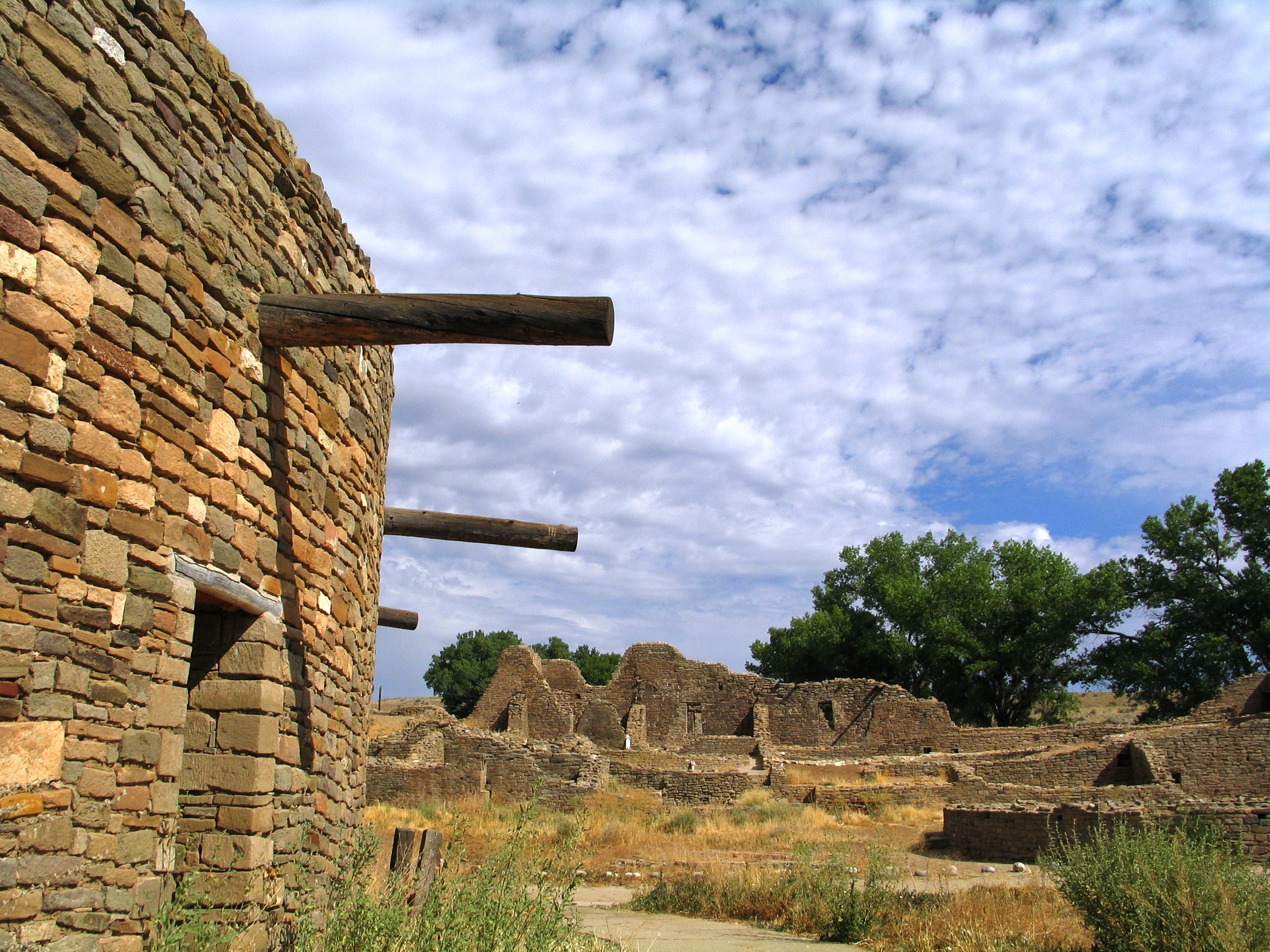
The centerpiece of the monument is the Aztec West great house, a massive sandstone structure that once contained over 400 interconnected rooms rising three stories high. What distinguishes Aztec Ruins from many other archaeological sites is the incredible state of preservation. Visitors can still see original wooden roof beams that were harvested from distant forests over 900 years ago, as well as the unique "T-shaped" doorways that are a hallmark of Chacoan design. The site is anchored by the Great Kiva, a colossal subterranean ceremonial chamber that has been meticulously reconstructed to its original 12th-century appearance, providing a rare opportunity to stand within the same sacred space where ancient communities gathered for prayer and ritual.
Aztec Ruins is far more than a collection of historic artifacts; it is a living landscape that remains deeply sacred to the descendant Pueblo, Hopi, and Navajo peoples. It is part of the Chaco Culture World Heritage Site, recognized for its outstanding universal value to humanity. A visit here is an invitation to slow down and reflect on the persistence of culture and the remarkable ability of ancient peoples to create enduring monuments in harmony with the natural world.
Key Highlights
- The Great Kiva: Step inside the world’s only fully reconstructed Chacoan Great Kiva, a 50-foot-diameter chamber that serves as a powerful symbol of Puebloan spirituality.
- Aztec West Great House: Explore a 900-year-old "apartment complex" featuring sophisticated masonry, intricate plasterwork, and original high-altitude timber roofs.
- T-Shaped Doorways: Observe the distinctive and precise architectural features that connect the people of Aztec to the larger Chacoan regional system.
- Original Roof Beams: See intact ponderosa pine and Douglas fir logs that have supported the great house ceilings since the 1100s, preserved by the dry desert air.
- The Heritage Garden: Walk through a contemporary garden that showcases the traditional crops—corn, beans, and squash—that sustained the Ancestral Puebloans.
- Museum Exhibits: View a world-class collection of pottery, woven sandals, and stone tools found during excavations at the site.
- Self-Guided Trail: Follow a 1/2-mile loop trail that winds through the core of the ancient city, with interpretive signs that explain the history and archaeology of each section.
Getting There
Aztec Ruins National Monument is located in the town of Aztec, New Mexico, approximately 15 miles northeast of Farmington.
By Car:
- From Albuquerque, NM: Travel north on US Highway 550 for approximately 180 miles (about 3 hours). Upon entering the town of Aztec, turn left onto Highway 516 (Main Street), drive 3/4 mile, and then turn right onto Ruins Road. The monument is 1/2 mile ahead.
- From Durango, CO: Head south on US Highway 550 for approximately 35 miles. In Aztec, turn right onto Ruins Road at the well-marked intersection.
- From Farmington, NM: Take Highway 516 east into the town of Aztec. Approximately 1/4 mile past Lightplant Road, turn left onto Ruins Road.
- Main Entrance: The physical address is 725 Ruins Road, Aztec, NM 87410.
Nearest Airports:
- Four Corners Regional Airport (FMN): Located in Farmington, offering limited regional flights.
- Durango-La Plata County Airport (DRO): Approximately 45 minutes north in Colorado, providing more extensive commercial service.
- Albuquerque International Sunport (ABQ): The nearest major international hub, roughly a 3-hour drive away.
Public Transit: There is no direct public transportation or shuttle service to the monument. A personal or rental vehicle is necessary for your visit. The town of Aztec is relatively compact, and some visitors staying in local accommodations may find the monument accessible via a long walk or bike ride.
Parking: Ample free parking is available for cars and RVs near the visitor center. Please note that vehicles may not be left in the lot after the monument closes at 5:00 PM.
For more detailed maps and turn-by-turn directions, visit the official park directions page.
Best Time to Visit
The high desert of northwestern New Mexico experiences wide temperature fluctuations and four distinct seasons.
Spring: Spring is a season of transition and can be unpredictable. You might encounter warm, sunny days or cold, biting winds and rain. This is a quiet time to visit before the summer crowds, and the desert plants begin to show signs of life.
Summer: Summers are hot and dry, with daytime highs typically in the 90s. Late July and August bring the "monsoon" season, characterized by dramatic afternoon thunderstorms that can quickly cool the air. It is recommended to explore the outdoor ruins in the early morning and save the air-conditioned museum for the heat of the afternoon.
Fall: Many consider autumn to be the ideal time to visit. The days are usually mild and clear, while the nights are crisp and cool. The cottonwood trees along the Animas River turn a vibrant gold, providing a beautiful backdrop for the stone ruins.
Winter: Winter brings a quiet and somber beauty to the site. Daytime temperatures range from the 20s to the 50s, and nights can be very cold, sometimes reaching 0°F. While snow is periodic, accumulations are usually light (1-2 inches), but the sight of the Great Kiva under a dusting of snow is truly spectacular.
Operating Hours: The monument grounds and trails are open daily from 7:00 AM to 5:00 PM. The visitor center and museum are open from 9:00 AM to 5:00 PM. The site is closed on Thanksgiving, Christmas, and New Year's Day.
Activities and Adventures
Aztec Ruins is primarily a site for historical exploration, archaeological study, and cultural reflection.
Exploring the Great House: Most visitors begin with the self-guided 1/2-mile walking trail. The trail is paved and takes you directly into the rooms of the Aztec West great house. You will pass through low-ceilinged rooms with original beams and see the intricate stonework that has survived for nearly a millennium.
The Great Kiva Experience: Entering the reconstructed Great Kiva is the highlight for many. The scale of the chamber and the quality of the reconstruction allow you to experience the acoustic and spatial qualities of Ancestral Puebloan architecture. It is a place for quiet observation and respect.
Museum and Park Film: The visitor center features a comprehensive museum with artifacts that were excavated directly from the site. A 15-minute park film provides the essential cultural and historical context for the Chacoan regional system and the lives of the people who lived at Aztec.
Ranger Programs: During the summer months, rangers often lead guided tours of the ruins and offer talks on topics such as Ancestral Puebloan astronomy, masonry techniques, and the importance of the Animas River. Check the daily schedule at the visitor center desk.
Junior Ranger Program: Children can participate in an educational program that focuses on archaeology and the preservation of ancient sites. Completing the activities earns them a Junior Ranger badge and a deeper understanding of the "Ancestors."
Photography: The stone architecture, T-shaped doors, and the interior of the Great Kiva offer incredible subjects for photography. The "golden hour" in the late afternoon provides the best light for highlighting the textures of the sandstone walls.
History & Significance
The story of Aztec Ruins is a narrative of a thriving civilization and its enduring legacy.
The Chacoan Connection: Around 1100 CE, people from Chaco Canyon (located about 50 miles south) began expanding their influence into the Animas River Valley. They brought with them advanced engineering, astronomical knowledge, and a complex social hierarchy. Aztec was designed as a "planned community," following the architectural blueprints of the great houses at Chaco.
Ancestral Puebloan Life: The people of Aztec were skilled farmers who utilized the water of the Animas River to grow the "Three Sisters" (corn, beans, and squash). They were also master potters and weavers, and they participated in a vast trade network that brought turquoise, macaw feathers, and sea shells from as far away as Mexico and the Gulf of California.
The Transition and Migration: By the late 1200s, environmental changes and social shifts led the people of Aztec to migrate away from the great house. They didn't "disappear"; rather, they moved south and east to join other Pueblo communities along the Rio Grande and at Zuni and Hopi. The descendants of these people still return to Aztec today to honor their ancestors.
Archaeology and Protection: Systematic excavations of the site began in the early 1900s by Earl Morris for the American Museum of Natural History. In 1923, President Warren G. Harding established the site as a National Monument. The reconstruction of the Great Kiva in the 1930s was a pioneering effort in "experimental archaeology" and remains a unique feature in the National Park System.
Lodging and Camping
While there is no camping or lodging within the monument itself, the surrounding area offers several options.
In-Park Camping: Not available.
Nearby Accommodations: The town of Aztec (within walking distance) has several historic inns and motels. The larger city of Farmington (15 miles southwest) offers a wide variety of national hotel chains, modern motels, and numerous dining options.
Camping Alternatives: For those looking to camp, Navajo Lake State Park is located about 30 miles to the east and offers developed campgrounds, boating, and fishing. There are also several private RV parks in the Aztec and Farmington areas.
Dining: The town of Aztec has a variety of local restaurants, ranging from casual cafes to traditional New Mexican cuisine. There are no food services within the monument grounds, but a beautiful picnic area is located near the parking lot.
Essential Information
Park Fees and Passes
- Entrance Fee: There is no fee to enter Aztec Ruins National Monument. It is a free public facility.
- Passes: While the monument is free, the visitor center bookstore sells "America the Beautiful" passes for use at fee-charging National Parks across the country.
Safety Considerations
- Heat and Hydration: The New Mexico sun is intense. Carry water and wear sun protection even on short walks through the ruins.
- Historic Preservation: Help protect the site by not climbing on the stone walls or touching the original wooden beams. These structures are fragile and irreplaceable.
- Respectful Conduct: Aztec Ruins is a sacred site to many Indigenous people. Please maintain a quiet and respectful demeanor, especially when inside the Great Kiva.
- Low Doorways: Many of the doorways in the great house are very low. Watch your head as you move between rooms.
- Wildlife: Be aware of your surroundings, as scorpions and snakes are native to the high desert. Stay on the paved paths.
Services and Facilities
The Visitor Center and Museum are fully accessible and include restrooms and water fountains. The 1/2-mile trail through the ruins is paved and mostly level, making it accessible to wheelchairs and strollers. The Great Kiva is also accessible via a ramp.
Contact
- Phone: 505-334-6174
- Email: [email protected]
- Official site: https://www.nps.gov/azru/index.htm
Aztec Ruins National Monument offers a profound journey into the heart of the Ancestral Puebloan world. By walking the same paths and standing in the same chambers as the people of 900 years ago, visitors can gain a deeper appreciation for the resilience, artistry, and spiritual depth of America's first architects. It is a place of enduring mystery and quiet majesty.
Park Overview
Detailed overview of the park's history, geography, and main attractions will go here. This section provides essential background information for visitors.
Top Hikes
- Iconic Summit TrailDifficulty: Strenuous • Distance: 8 miles round trip
Loading reviews…
- Waterfall LoopDifficulty: Moderate • Distance: 3 miles loop
Loading reviews…
- Lakeside WalkDifficulty: Easy • Distance: 1.5 miles out & back
Loading reviews…
Recommended Hiking Gear
Gear up for your adventure with our trusted partners. These items help support the site at no extra cost to you!

Places to Stay
- Historic Park LodgeBook early!Type: Lodge
Loading reviews…
- Riverside CampgroundReservations required.Type: Campground
Loading reviews…
- Gateway Town Hotel15 miles from entrance.Type: Nearby Hotel
Loading reviews…