Chaco Culture National Historical Park
Fast Facts
Chaco Culture National Historical Park
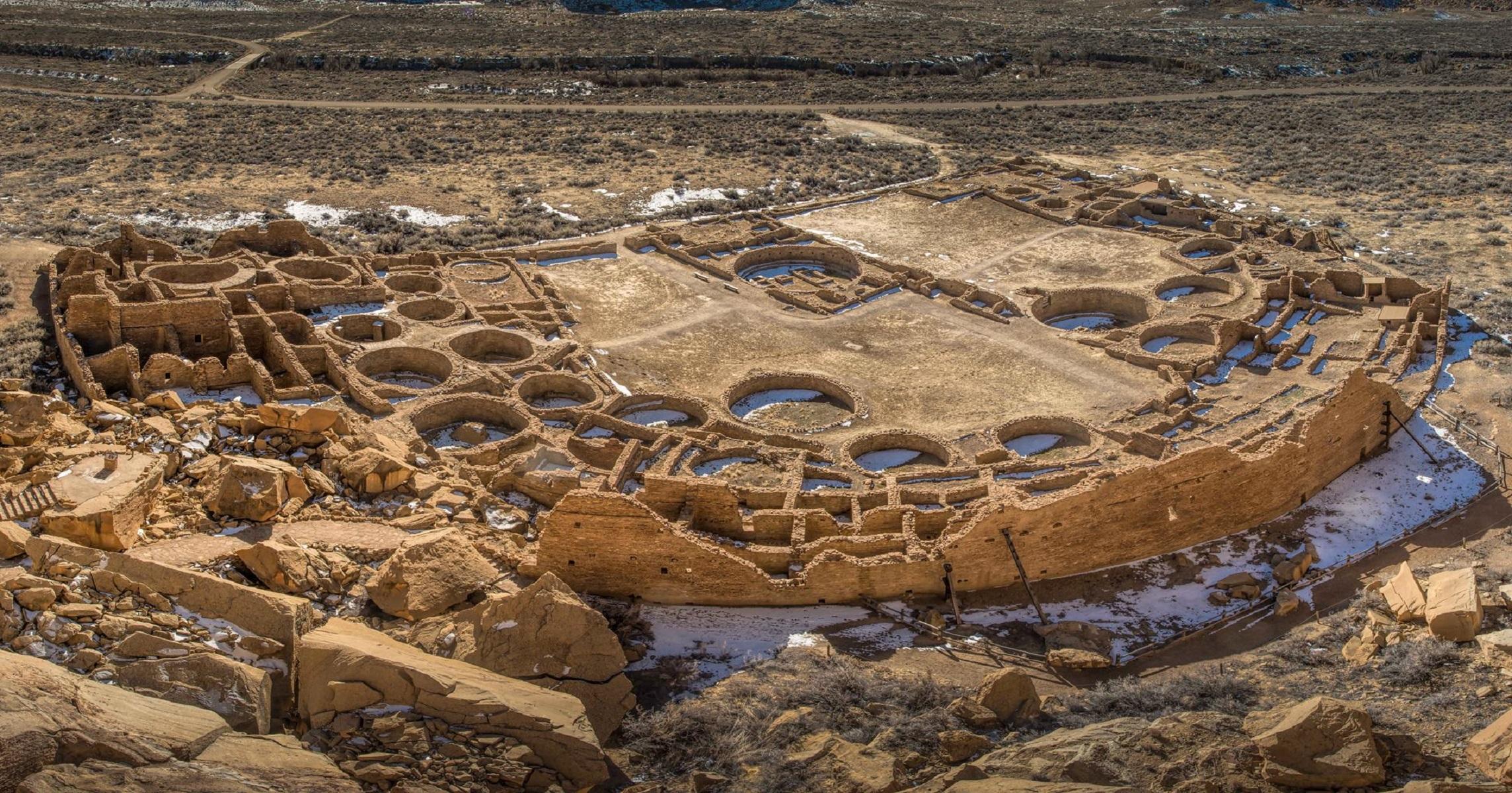
Deep in a remote and rugged canyon of northwestern New Mexico, Chaco Culture National Historical Park preserves the most architecturally advanced and socially complex center of the Ancestral Puebloan world. Between 850 and 1250 CE, Chaco Canyon was a thriving regional hub—a vast network of "great houses," kivas, and ceremonial sites that served as the spiritual and political heart for a civilization spanning the Four Corners region. The park is a UNESCO World Heritage Site, recognized for its monumental stone masonry, its sophisticated understanding of astronomy, and its role as a sacred ancestral homeland for many modern-day Indigenous peoples.
The geography of Chaco is a stark, monochromatic landscape of high-desert mesas and sandy washes. Within this seemingly inhospitable environment, the Chacoans constructed massive multi-story buildings, such as Pueblo Bonito, which once contained over 600 rooms and rose four stories high. These were not mere villages; they were carefully planned public structures that utilized millions of sandstone blocks and thousands of high-altitude timber beams hauled from distant mountains. The precision of their construction is breathtaking, with many buildings perfectly aligned to the lunar and solar cycles, reflecting a deep cosmic connection that still fascinates scientists and visitors today.
Visiting Chaco Culture is an immersive journey into the depths of time and silence. Because of its extreme isolation and the challenging dirt roads required to reach it, the park remains a place of profound solitude. Whether you are peer into the intricate masonry of a 1,000-year-old kiva, hiking to the top of the mesa for a bird’s-eye view of the canyon’s layout, or standing under the brilliant stars of an International Dark Sky Park, the monument provides a connection to the persistence of human ingenuity. It is a sacred space that demands respect and offers a rare opportunity to reflect on the legacy of America's first great architects.
Key Highlights
- Pueblo Bonito: Explore the largest and most famous of the Chacoan great houses, a D-shaped complex featuring over 600 rooms and dozens of circular ceremonial kivas.
- Chetro Ketl: Walk through a massive great house that features unique architectural elements, including a Great Kiva and an extensive back wall stretching over 500 feet.
- Fajada Butte: Witness the iconic landmark of the canyon, home to the "Sun Dagger" petroglyph, which precisely marks the solstices and equinoxes (visible from below).
- International Dark Sky Park: Experience some of the darkest night skies in North America, with ranger-led astronomy programs that utilize the park’s own observatory.
- Pueblo Alto Trail: Hike to the mesa top for spectacular panoramic views of the entire Chaco Canyon and the unexcavated ruins of the "New Alto" site.
- Casa Rinconada: Visit one of the largest and most symmetrical Great Kivas in the Southwest, standing alone on a ridge as a powerful symbol of community ritual.
- Museum and Film: View a world-class collection of Chacoan pottery, turquoise, and macaw feathers in the visitor center museum.
Getting There
Chaco Culture National Historical Park is located in a remote part of northwestern New Mexico. Access to the park involves driving on unpaved roads that can be very rough or impassable after rain.
By Car:
- From the North (Farmington/Bloomfield): Turn off US Highway 550 at Nageezi onto County Road 7900. Follow the signs for approximately 21 miles to the park entrance. The final 13 miles are unpaved.
- From the South (Gallup/Grant): Take NM Highway 371 north to the junction with Indian Route 9. Proceed east to the turn-off for Indian Route 491 (near Pueblo Pintado). This route involves over 20 miles of dirt road and is only recommended for high-clearance vehicles.
- Main Entrance: The physical address for the visitor center is 1808 CR 7950, Nageezi, NM 87037.
Important Road Warning: The dirt roads to Chaco are notorious for being "wash-boarded" and sandy. During or after thunderstorms, they can become muddy and slick, trapping even 4WD vehicles. Always call the park at 505-786-7014 or check the website for current road conditions before your visit.
Nearest Airports:
- Four Corners Regional Airport (FMN): Located in Farmington, about 1.5 to 2 hours to the north.
- Albuquerque International Sunport (ABQ): The nearest major hub, approximately 3 hours (about 150 miles) to the southeast.
Public Transit: There is no public transportation or shuttle service to Chaco Canyon. A personal or rental vehicle is essential. Ensure your vehicle is in good working order and your gas tank is full before leaving the main highways.
For more detailed maps and turn-by-turn directions, visit the official park directions page.
Best Time to Visit
The high-desert climate of Chaco Canyon features extreme temperature fluctuations and four distinct seasons.
Spring (April - May): Spring is a season of transition and often brings high winds and dust storms. Temperatures are typically mild during the day (60s and 70s), but can drop below freezing at night. This is a quiet time to visit before the summer heat.
Summer (June - August): Summers are hot, with daytime highs frequently reaching the 90s and 100s. Late summer brings the "monsoon" season, characterized by sudden and violent afternoon thunderstorms. These storms can make the access roads impassable in minutes. It is highly recommended to explore the ruins in the early morning.
Fall (September - October): Many consider autumn to be the ideal time for a visit. The intense heat of summer fades into crisp, clear days with temperatures in the 60s and 70s. The light during the fall is exceptional for highlighting the textures of the sandstone masonry. Crowds remain manageable.
Winter (November - March): Winter turns the canyon into a silent and somber landscape. Temperatures are cold, frequently dropping into the teens or lower at night. Snow is common and can transform the ruins into a picturesque winter scene. Access roads may be closed temporarily due to snow or mud.
Operating Hours: The park gates are open daily from 7:00 AM to sunset. The Visitor Center and museum are typically open from 9:00 AM to 5:00 PM. The park is closed on Thanksgiving, Christmas, and New Year's Day.
Activities and Adventures
Chaco Culture offers a range of activities focused on historical exploration, archaeological study, and quiet desert recreation.
Exploring the Great Houses: Most visitors spend their time walking the 9-mile Canyon Loop Drive, which provides access to six major sites. Short, level paths lead through the rooms and plazas of Pueblo Bonito, Chetro Ketl, and Hungo Pavi. Rangers often offer guided walks through Pueblo Bonito during the summer months.
Hiking the Mesa Trails: For a more strenuous experience, several trails climb the canyon walls to the mesa tops. The Pueblo Alto Trail (5 miles round-trip) offers the best views of the canyon's layout and the ancient "Chacoan Roads" that radiate out into the desert. The South Rim Trail (7 miles) provides a more solitary hike with views of the southern great houses.
Stargazing and Astronomy: Chaco is a certified International Dark Sky Park. The lack of light pollution in this remote area is nearly absolute. During the summer and fall, the park hosts frequent "Night Sky" programs at the on-site observatory, featuring telescope viewing and cultural talks on Chacoan archaeoastronomy.
Biking: The 9-mile Canyon Loop Drive is paved and relatively flat, making it an excellent and quiet place for cycling. Biking allows you to move between the ruins without the noise and dust of a vehicle.
Photography: Chaco is a world-class destination for photographers. the "golden hour" at sunrise and sunset illuminates the colorful sandstone walls and creates dramatic shadows in the kivas. For night photographers, the Milky Way over Fajada Butte is one of the most iconic shots in the Southwest.
Junior Ranger Program: Children can participate in an educational program that focuses on Ancestral Puebloan history, masonry techniques, and the importance of site preservation. Completing the activities earns them a Junior Ranger badge.
History & Significance
The story of Chaco is a narrative of a thriving civilization and its enduring legacy.
The Chacoan Regional System: By 1050 CE, Chaco had become the center of a vast regional system that included over 150 "outlier" great houses across 30,000 square miles. These sites were connected by a network of wide, straight "roads" that were likely used for ceremonial pilgrimages and trade. Items from as far away as Mexico (macaw feathers, copper bells) and the Gulf of California (sea shells) have been found at Chaco, proving its status as a major trade hub.
Mastery of Masonry: The Chacoans developed a unique and highly refined masonry style, utilizing local sandstone. They created different patterns of "core-and-veneer" walls, where a central core of rough stone was faced with meticulously fitted thin slabs. This allowed them to build larger and taller structures than any other culture in the prehistoric Southwest.
Astronomy and the Cosmos: Many of the buildings at Chaco are precisely aligned to the movements of the sun and moon. The "Sun Dagger" on Fajada Butte is the most famous, but buildings like Pueblo Bonito and Casa Rinconada also demonstrate a profound knowledge of the 18.6-year lunar cycle and the cardinal directions.
Sacred Ancestry: Around 1250 CE, the Chacoan people began to migrate away from the canyon, likely due to prolonged drought and social shifts. They didn't "disappear"; they are the direct ancestors of the modern-day Pueblo people of New Mexico and Arizona (Hopi, Zuni, and Rio Grande Pueblos). To these communities, Chaco is not a "ruin" but a living ancestral home where the spirits of their people remain.
Lodging and Camping
Staying at Chaco requires careful planning, as options within the park are limited and primitive.
In-Park Camping:
- Gallo Campground: This is the only campground in the park. It features 48 sites nestled among the fallen boulders of the canyon. There are no RV hookups, no showers, and water is only available at the visitor center (1 mile away). Sites should be reserved well in advance through Recreation.gov, as they are almost always full in the spring and fall.
Nearby Accommodations:
- Farmington or Bloomfield, NM: Located 60-70 miles north, offering a wide range of hotels, motels, and modern amenities.
- Grants or Gallup, NM: Located approximately 70-80 miles south and west.
Dining: There are no food services within Chaco Culture National Historical Park. You must bring all the food and supplies you will need for your entire stay. The visitor center sells bottled water and limited snacks, but it is not a grocery store. It is highly recommended to bring a picnic lunch and plenty of extra water.
Essential Information
Park Fees and Passes
- Entrance Fee: $25 per private vehicle, valid for 7 days.
- Camping Fees: Vary by site, typically around $20 per night.
- Passes: Chaco accepts all "America the Beautiful" passes.
Safety Considerations
- Road Safety: The unpaved access roads are the most significant hazard. Do not attempt to drive to Chaco in a low-clearance vehicle if rain is in the forecast. Watch for livestock on the road.
- Heat and Hydration: The high-desert sun is intense. Carry and drink at least one gallon of water per person per day.
- Historic Preservation: Help protect the ruins. Do not climb on masonry walls or touch the fragile plaster. Do not remove any artifacts, including pottery shards or stones. These items are protected by federal law.
- Respectful Conduct: Chaco is a sacred site. Please maintain a quiet and respectful demeanor, especially when near kivas.
- Wildlife: Be mindful of rattlesnakes and scorpions, which are native to the canyon. Stay on the developed paths.
Services and Facilities
The Visitor Center and Museum are fully accessible and include restrooms and water fountains. Most of the ruins accessible via the Canyon Loop Drive feature level paths that are suitable for wheelchairs and strollers with some assistance. The mesa-top trails are rugged and not wheelchair accessible.
Contact
- Phone: 505-786-7014
- Email: [email protected]
- Official site: https://www.nps.gov/chcu/index.htm
Chaco Culture National Historical Park is a place of profound power and immense scale. By standing in the same plazas and peering into the same cosmic alignments as the people of 1,000 years ago, visitors can gain a deeper appreciation for the resilience and spiritual depth of America's first great architects. It is a destination that stays with you, a desert reminder of the enduring beauty and mystery of the human journey.
Park Overview
Detailed overview of the park's history, geography, and main attractions will go here. This section provides essential background information for visitors.
Top Hikes
- Iconic Summit TrailDifficulty: Strenuous • Distance: 8 miles round trip
Loading reviews…
- Waterfall LoopDifficulty: Moderate • Distance: 3 miles loop
Loading reviews…
- Lakeside WalkDifficulty: Easy • Distance: 1.5 miles out & back
Loading reviews…
Recommended Hiking Gear
Gear up for your adventure with our trusted partners. These items help support the site at no extra cost to you!

Places to Stay
- Historic Park LodgeBook early!Type: Lodge
Loading reviews…
- Riverside CampgroundReservations required.Type: Campground
Loading reviews…
- Gateway Town Hotel15 miles from entrance.Type: Nearby Hotel
Loading reviews…